- No products in the cart.




LARDER CUPBOARDS: THE COMPLETE UK GUIDE TO CREATING A BEAUTIFULLY ORGANISED KITCHEN WITH SERIOUS STORAGE POWER

19
Aug
Larder cupboards have become one of the most practical ways to add substantial storage to a modern UK kitchen without requiring a separate walk-in pantry. Combining generous capacity with a relatively compact footprint, the right larder cupboard can transform how food, cookware, appliances and everyday kitchen essentials are stored.
For many households, kitchen storage is not simply about having more cupboards. It is about making better use of the space available. Deep base cabinets can become cluttered, wall cupboards may be difficult to reach, and worktops can quickly disappear beneath small appliances, jars, packets and cooking equipment.
Larder cupboards provide a different solution.
Their tall design takes advantage of vertical space, while shelves, drawers, door racks and internal compartments can make everything from tins and cereals to baking equipment and kitchen appliances easier to organise.
They can be particularly valuable in smaller UK kitchens where floor space is limited, but they are equally useful in larger kitchens where homeowners want to create a dedicated pantry-style storage area.
This complete guide to larder cupboards explores the different styles available, what they can be used for, how to choose the right dimensions, where to position one and how to organise it effectively.
What Are Larder Cupboards?
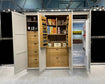
Larder cupboards are tall kitchen storage units designed to provide a large amount of organised storage within a relatively small area of floor space.
Traditionally, a larder was a separate cool room or cupboard used for storing food. While some larger properties still have dedicated pantry rooms, many modern homes simply do not have the available space.
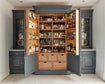
Modern larder cupboards recreate much of the practical storage functionality of a traditional pantry within a single piece of kitchen furniture.
Depending on the design, a larder cupboard may include:
- Multiple internal shelves
- Adjustable shelving
- Door-mounted storage racks
- Internal drawers
- Bottle storage
- Open compartments
- Pull-out storage systems
- Dedicated appliance space
- Lower cabinets or drawers
The enclosed design also means everyday kitchen clutter can remain hidden behind doors, helping the room feel calmer and more organised.
Why Are Larder Cupboards So Popular in UK Kitchens?
One of the main reasons larder cupboards work so well in British homes is their ability to maximise vertical space.
UK kitchens vary enormously in size. Large detached properties may have spacious kitchen-diners, while terraced houses, flats and older properties can have relatively compact kitchens.
In either situation, storage space is valuable.
A tall larder cupboard can provide several levels of shelving while occupying approximately the same amount of floor space as a much shorter cabinet.
This makes larder cupboards particularly useful for households wanting to increase kitchen storage without sacrificing significant amounts of usable floor area.
They also reflect the growing popularity of organised pantry storage. Instead of spreading dry food, tins, bottles and cooking ingredients across several cupboards, a larder cupboard allows many frequently used items to be stored together.
What Can You Store in Larder Cupboards?
One of the greatest advantages of larder cupboards is their versatility.
Although traditionally associated with food storage, modern larder cupboards can accommodate almost anything you regularly use in the kitchen.
Common pantry items include pasta, rice, flour, cereals, tins, jars, sauces, condiments, tea, coffee, baking ingredients and snacks.
However, the cupboard can also be used for:
- Plates and bowls
- Mugs and glasses
- Saucepans
- Baking trays
- Mixing bowls
- Food storage containers
- Kitchen appliances
- Cleaning products
- Table linen
- Serving dishes
- Cookbooks
The best arrangement depends on your household and how you use your kitchen.
For example, someone who regularly bakes might dedicate an entire section to flour, sugar, decorating equipment and baking tins. A busy family might prioritise breakfast foods, snacks and packed-lunch ingredients.
Rather than following a fixed system, organise your larder cupboard around your everyday routine.
Different Types of Larder Cupboards
Not all larder cupboards are designed in the same way. Understanding the main options can make choosing the right model considerably easier.
Freestanding Larder Cupboards
Freestanding larder cupboards are separate pieces of furniture rather than permanently integrated kitchen units.
This makes them particularly flexible.
A freestanding larder cupboard can often be positioned against an available kitchen wall, in a utility room, dining area or suitable alcove without redesigning the entire kitchen.
They can also be attractive if you want to introduce additional storage into an existing kitchen.
Rather than replacing fitted cabinetry, you can potentially add one substantial storage unit.
Freestanding designs are available in contemporary, traditional, farmhouse-inspired and minimalist styles, allowing them to complement many different interiors.
Tall Larder Cupboards
Tall larder cupboards are designed specifically to maximise vertical storage.
Height is extremely important when considering storage efficiency. Increasing the height of a cupboard can create significantly more usable shelf space without increasing its footprint.
A tall larder cupboard can therefore be an excellent choice for smaller kitchens.
However, always consider accessibility.
Frequently used products should generally remain around waist to eye level, while higher shelves can be reserved for lighter or less frequently used items.
Narrow Larder Cupboards
A narrow larder cupboard can provide useful additional storage where a standard-width unit would be too large.
This can make narrow designs particularly suitable for:
- Compact kitchens
- Flats
- Utility rooms
- Kitchen alcoves
- Unused wall sections
- Smaller dining areas
Even a relatively narrow cupboard can provide considerable storage when shelves extend vertically through most of the unit.
If floor space is particularly restricted, height can often compensate for reduced width.
Double Larder Cupboards
Double larder cupboards provide greater internal capacity and are ideal for households requiring substantial pantry storage.
Their wider interior can make it easier to establish clearly defined storage zones.
For example, one section could contain everyday food while another stores cookware and appliances.
The trade-off is width.
Always measure the intended location carefully before purchasing a large double larder cupboard, particularly if the surrounding area includes doorways, radiators or frequently used walkways.
Triple Larder Cupboards
For maximum storage, triple larder cupboards can provide an impressive amount of capacity.
These larger units can function almost like a miniature pantry wall.
They may be suitable for larger kitchens, open-plan kitchen-diners and households that buy food in greater quantities.
A triple larder cupboard can also reduce the need for multiple smaller storage cabinets distributed throughout the kitchen.
Because these cupboards are substantial pieces of furniture, proportion becomes particularly important. Make sure the room is large enough for the cupboard to feel balanced rather than overwhelming.
Larder Cupboards With Door Storage
Door-mounted racks are one of the most useful features available on some larder cupboards.
The inside surface of a cupboard door would otherwise provide little practical storage. Adding shallow racks turns this unused area into valuable space.
Door racks can work particularly well for smaller products such as:
- Herbs and spices
- Sauces
- Small jars
- Packets
- Baking ingredients
- Condiments
They can also improve visibility because smaller products are less likely to disappear behind larger items on deep shelves.
How to Choose the Right Larder Cupboard
Choosing between different larder cupboards should involve more than simply selecting the design you like most.
Size, internal configuration, available space and your storage requirements all matter.
Start With Your Available Space
Measure the intended location before comparing cupboards.
Check:
- Available width
- Available height
- Cupboard depth
- Skirting boards
- Door clearance
- Nearby windows
- Radiators
- Plug sockets
- Light switches
- Kitchen walkways
Do not assume that because the cupboard physically fits into a space, it will necessarily work comfortably there.
The doors must have enough room to open properly, and the cupboard should not obstruct normal movement through the kitchen.
Consider Larder Cupboard Depth
Depth is especially important in smaller kitchens.
A cupboard that projects too far into the room can make a walkway feel narrow, even when its width is suitable.
Shallower larder cupboards can therefore be particularly useful in compact spaces.
There is another advantage to reduced depth: visibility.
Very deep pantry shelves can encourage items to become hidden at the back. Shallower shelves make it easier to see what you already have.
Think About Internal Storage
Two larder cupboards with almost identical external dimensions can offer very different amounts of practical storage.
Look carefully at the interior.
Consider the number of shelves, shelf spacing, door storage, drawers and the size of individual compartments.
Adjustable shelving can be particularly valuable because your storage requirements may change.
A tall cereal box requires a different shelf height from a tin of beans. Being able to alter the layout can prevent wasted vertical space.
Larder Cupboards for Small Kitchens
Limited space does not necessarily mean you have to sacrifice pantry storage.
In fact, larder cupboards can be especially effective in small kitchens because they make better use of vertical space.
Look for tall, narrow or relatively shallow designs.
The aim should be to gain substantial internal storage without making the kitchen feel crowded.
Light-coloured finishes can also help larger pieces of furniture feel less visually dominant.
White larder cupboards, cream finishes, pale grey units and light wood tones can work particularly well where natural light or floor space is limited.
Consider underused areas too.
An empty wall, alcove or section of space near a dining area may accommodate a larder cupboard without interfering with the main cooking zone.
White Larder Cupboards
White larder cupboards remain a popular option because they are exceptionally versatile.
White works with a wide variety of kitchen colour schemes and can be particularly effective in smaller or darker rooms.
A white larder cupboard can complement:
- White kitchens
- Grey kitchens
- Natural wood interiors
- Modern kitchens
- Farmhouse kitchens
- Scandinavian-inspired interiors
- Neutral kitchen schemes
White can also help a substantial storage unit feel lighter visually.
If your kitchen already contains white cabinetry, choosing a similar finish can help the larder cupboard appear more integrated with the room.
Grey Larder Cupboards
Grey larder cupboards offer a slightly more contemporary alternative while remaining relatively neutral.
Pale grey can create a soft, understated appearance, while darker grey provides greater contrast.
Grey also pairs naturally with many common kitchen materials, including timber, stone-effect worktops, black hardware and metallic finishes.
If you want additional pantry storage without choosing either bright white or a strong statement colour, grey can provide an effective middle ground.
Black Larder Cupboards
Black larder cupboards can create a striking focal point.
They are particularly effective in contemporary kitchens and rooms with sufficient natural light.
Black can work beautifully alongside lighter walls, wood flooring and contrasting worktops.
However, because darker furniture has greater visual weight, consider the overall size of the kitchen before choosing a very large black cupboard.
In smaller spaces, strategic contrast and good lighting become particularly important.
Oak and Wood-Effect Larder Cupboards
Oak larder cupboards and wood-effect finishes introduce warmth and natural character.
They can work particularly well in traditional kitchens, country-style interiors and spaces combining modern cabinetry with natural materials.
Wood tones also have the advantage of being relatively timeless.
Rather than making the larder cupboard appear purely functional, an attractive wood finish can help it feel like a substantial piece of furniture.
This is especially valuable when the cupboard is positioned within a kitchen-diner or open-plan living space.
Freestanding Larder Cupboards Versus Built-In Pantry Storage
Both freestanding and fitted pantry solutions have advantages.
Built-in cabinetry can create a seamless appearance, particularly when designed as part of a completely new kitchen.
However, installing fitted storage can involve considerably more planning and disruption.
Freestanding larder cupboards provide greater flexibility.
They can be particularly useful when:
- The existing kitchen is staying in place
- You need additional storage quickly
- You are renting
- You may change the room layout later
- You prefer furniture-style storage
- You want a dedicated pantry without renovating the kitchen
For many households, a freestanding larder cupboard offers an effective balance between capacity, flexibility and appearance.
How to Organise Larder Cupboards Properly
Buying a spacious cupboard is only half the solution.
How you organise it determines how useful that space becomes.
Create Storage Zones
Divide the cupboard into logical categories.
For example:
Breakfast foods
Baking ingredients
Pasta and rice
Tins and jars
Snacks
Sauces and condiments
Drinks
Cooking oils
Kitchen appliances
Grouping similar products together makes them easier to locate and helps you see when supplies are running low.
Keep Everyday Items Within Easy Reach
The most accessible shelves should contain the products you use most frequently.
Items used daily are usually best stored between approximately waist and eye level.
Less frequently used equipment can go higher or lower.
Use Lower Shelves for Heavier Items
Heavy products are generally easier and safer to store lower down.
These might include:
- Large bottles
- Bulk food
- Heavy cookware
- Kitchen appliances
Avoid placing unnecessarily heavy objects on the highest shelves.
Avoid Overfilling Shelves
A completely packed shelf can actually make storage less efficient.
If you have to remove several products every time you need something from the back, the cupboard will quickly become frustrating to use.
Leaving some visibility and movement around products makes everyday access easier.
How Larder Cupboards Can Reduce Kitchen Clutter
Worktop clutter is one of the most common problems in busy kitchens.
Toasters, coffee equipment, food containers, bread, cereals and cooking ingredients can gradually consume available preparation space.
A well-organised larder cupboard provides somewhere for many of these items to go.
Depending on the dimensions and shelving configuration, some small appliances can also be stored inside when they are not being used.
This helps preserve valuable worktop space for food preparation.
Reducing visible clutter can also make the kitchen appear larger and easier to maintain.
Where Should You Position a Larder Cupboard?
Positioning affects both appearance and practicality.
Ideally, a larder cupboard should be easily accessible from the main food preparation area without obstructing important walkways.
Suitable locations might include:
- At the end of a kitchen cabinet run
- Against an unused wall
- Inside a kitchen alcove
- Near a fridge
- In a utility room
- Alongside a dining area
- Within an open-plan kitchen
Think about how often you will use the cupboard.
If it contains everyday food, placing it reasonably close to the main kitchen workspace is usually preferable.
If it mainly stores occasional cookware or bulk supplies, a slightly more distant position may be perfectly practical.
Can a Larder Cupboard Replace a Pantry?
For many households, yes.
A well-designed larder cupboard cannot provide the physical walk-in space of a full pantry room, but it can perform many of the same storage functions.
This is particularly true when the cupboard includes full-height shelving and additional door storage.
The advantage is efficiency.
Creating a dedicated pantry room requires significant floor space. A larder cupboard concentrates storage vertically and may occupy only a fraction of that area.
For homes without an existing pantry, it can therefore be one of the most realistic ways to achieve pantry-style organisation.
Larder Cupboards for Utility Rooms
Larder cupboards are not restricted to kitchens.
A utility room can be an excellent location, particularly when additional household storage is required.
Depending on the layout, a utility room larder cupboard might contain:
- Cleaning products
- Laundry supplies
- Spare kitchen rolls
- Pet supplies
- Bulk food
- Bottled drinks
- Recycling accessories
- Household equipment
If cleaning products are being stored alongside food, keep the categories safely separated and follow the storage instructions provided with household products.
Larder Cupboards for Open-Plan Kitchen-Diners
Open-plan living has changed how kitchen furniture is viewed.
When the kitchen is visible from the dining or living area, storage needs to look attractive as well as function effectively.
Furniture-style larder cupboards can be particularly useful in these environments.
Rather than looking purely like kitchen cabinetry, a well-designed freestanding cupboard can form part of the overall interior.
This is where finish, handles, proportions and detailing become especially important.
Choose a design that complements furniture elsewhere in the room.
What Size Larder Cupboard Do You Need?
There is no universal ideal size.
The right dimensions depend on the available space and how much you intend to store.
Before buying, consider both current and future storage requirements.
If your existing cupboards are already overflowing, a very small additional unit may only provide temporary relief.
On the other hand, buying the largest possible cupboard is not always the best answer.
The aim is to create enough useful storage while maintaining comfortable circulation around the kitchen.
Measure carefully and consider the cupboard in three dimensions: width, depth and height.
It can be helpful to mark the proposed footprint on the floor before purchasing. This gives you a better impression of how far the cupboard will project into the room.
Features to Look for When Buying Larder Cupboards
The best features depend on how you intend to use your cupboard, but several details are worth considering.
Adjustable Shelves
Adjustable shelving allows the interior to evolve with your storage needs.
It also reduces wasted space between shelves.
Door Racks
Internal door storage is extremely efficient for smaller items.
It can also prevent spice jars, packets and condiments becoming lost behind larger products.
Drawers
Drawers are useful for smaller products that might otherwise create clutter.
They can also provide easy access to items positioned lower in the cupboard.
Multiple Compartments
Separate sections can make categorisation easier, particularly in larger cupboards.
Enclosed Storage
Doors hide visual clutter and protect stored items from everyday kitchen dust.
This is one of the biggest differences between a larder cupboard and open shelving.
Common Mistakes When Choosing Larder Cupboards
One common mistake is buying based solely on external appearance.
A beautiful cupboard is of limited value if the internal layout does not suit your needs.
Another mistake is failing to measure door clearance.
Always consider the cupboard when fully open, not simply when closed.
Depth is also frequently overlooked. In narrow kitchens, even a relatively small difference in depth can affect how spacious the room feels.
Finally, avoid focusing entirely on capacity.
Organisation and accessibility are just as important as raw storage volume.
Are Larder Cupboards Worth It?
For households struggling with limited kitchen storage, larder cupboards can be an extremely practical investment.
They offer several significant advantages:
- Large amounts of vertical storage
- Better pantry organisation
- Reduced worktop clutter
- Flexible positioning
- Dedicated food storage
- Attractive furniture-style designs
- Options for small and large kitchens
Their versatility is arguably their greatest strength.
A larder cupboard can begin as food storage and later be reorganised for cookware, appliances, household products or a mixture of categories.
Choosing Larder Cupboards for Your Kitchen
The best larder cupboards combine storage capacity, practical dimensions and a design that works naturally with the surrounding kitchen.
Start by measuring your available space accurately.
Then think about what you actually need to store.
If floor space is limited, prioritise tall or narrow larder cupboards. If capacity is your main concern, consider wider double or triple designs. If organisation is particularly important, look for adjustable shelves, internal drawers and door-mounted racks.
Colour and style matter too.
White larder cupboards can brighten smaller rooms, grey designs provide contemporary versatility, black cupboards create stronger contrast, and oak or wood-effect finishes introduce warmth and character.
Ultimately, the right cupboard should make everyday kitchen life easier.
When ingredients are visible, appliances have a proper home and worktops are less cluttered, the entire kitchen can become more pleasant and efficient to use.
Larder cupboards are therefore much more than additional kitchen furniture. For many UK homes, they provide a practical modern alternative to the traditional pantry and a highly effective way to make better use of available space.
FAQ Section
What are larder cupboards used for?
Larder cupboards are primarily used for storing food and kitchen essentials. They can hold dry ingredients, tins, jars, cereals, pasta, rice, baking products, drinks, cookware, small appliances and other household items. Their tall design allows a substantial amount of storage to be concentrated within a relatively small footprint.
What is the difference between a larder cupboard and a pantry?
A pantry traditionally refers to a dedicated cupboard or room used for food storage, whereas a larder cupboard is usually a self-contained storage unit. Modern larder cupboards can provide many of the organisational benefits of a pantry without requiring a separate room.
Are larder cupboards suitable for small kitchens?
Yes. Tall and narrow larder cupboards can be particularly suitable for small kitchens because they use vertical space efficiently. A relatively narrow footprint can still provide several levels of useful storage.
What depth should a larder cupboard be?
The ideal depth depends on your kitchen and storage requirements. Deeper cupboards provide greater capacity, but shallower larder cupboards can be easier to organise because products remain more visible. Always consider how far the cupboard will project into the room, especially in narrow kitchens.
Where is the best place to put a larder cupboard?
Good locations include an unused kitchen wall, the end of a cabinet run, an alcove, near the fridge or within a utility room. For everyday food storage, positioning the cupboard reasonably close to the main food preparation area can make it more convenient.
Can you use a freestanding larder cupboard as a pantry?
Yes. A freestanding larder cupboard can function as a highly effective pantry, particularly when it contains multiple shelves and door storage. It is a practical option for homes that do not have space for a dedicated pantry room.
Are tall larder cupboards better than standard cupboards?
Tall larder cupboards can provide considerably more storage per square metre of floor space because they make use of vertical room. Whether they are better depends on your kitchen layout and what you need to store.
What should go on the top shelves of a larder cupboard?
Top shelves are generally best for lightweight items that are used less frequently. Avoid storing unnecessarily heavy objects at height. Everyday food and regularly used ingredients are usually more convenient at eye or waist level.
How do you organise deep larder cupboards?
Group similar products together and keep frequently used items towards the front. Containers, baskets or trays can help group smaller products. Avoid overcrowding deep shelves because products hidden at the back can easily be forgotten.
Are larder cupboards only for food?
No. Larder cupboards can also store cookware, baking equipment, tableware, small appliances, cleaning supplies, household products and utility-room essentials. Their internal layout can be adapted to suit individual requirements.
What colour larder cupboard is best for a small kitchen?
White, cream, pale grey and lighter wood finishes can help a substantial cupboard feel less visually dominant in a small kitchen. However, the best colour should also complement your existing cabinets, walls, flooring and worktops.
Should I choose a narrow or wide larder cupboard?
Choose according to your available floor space and storage requirements. Narrow larder cupboards are useful where width is restricted, while wider double or triple larder cupboards can provide much greater capacity for larger households.
Can larder cupboards store kitchen appliances?
Many larder cupboards can accommodate small kitchen appliances if the shelves are sufficiently deep, strong and appropriately spaced. Always check the dimensions and weight requirements before deciding where appliances will be stored.
How can I maximise storage inside a larder cupboard?
Use adjustable shelving efficiently, group products by category, take advantage of door racks, keep heavy items lower down and avoid leaving excessive unused space between shelves. The goal is to use the full height of the cupboard while keeping everything accessible.
Do larder cupboards need to match existing kitchen units?
Not necessarily. A larder cupboard can either coordinate with existing kitchen cabinets or intentionally contrast with them as a freestanding piece of furniture. In open-plan spaces, choosing a cupboard that complements both the kitchen and surrounding furniture can create a more cohesive appearance.
Are freestanding larder cupboards practical in rented homes?
They can be. Because freestanding larder cupboards are not necessarily integrated permanently into kitchen cabinetry, they may provide additional storage without a complete kitchen renovation. Installation and securing requirements should always be checked for the particular cupboard and property.
What should I check before buying larder cupboards online?
Check the full external dimensions, internal dimensions where provided, shelving configuration, door opening requirements, material, finish and assembly information. Measure your intended location carefully and also consider access through doors, hallways and staircases where relevant.
How can larder cupboards make a kitchen look tidier?
They provide enclosed storage for products that might otherwise occupy worktops, open shelving or several smaller cabinets. Keeping food, cookware and appliances behind cupboard doors can significantly reduce visible clutter.
Can larder cupboards be used in utility rooms?
Yes. Larder cupboards can provide useful utility-room storage for bulk food, cleaning products, laundry supplies and household equipment. Different categories should be stored appropriately and safely, particularly where household chemicals are involved.
Why are larder cupboards useful in modern UK homes?
Larder cupboards make efficient use of vertical space while providing flexible, organised storage. This can be particularly valuable in UK properties where a separate walk-in pantry is unavailable. They allow homeowners to create substantial pantry-style storage without sacrificing an entire room.