- No products in the cart.




LARDERS REIMAGINED: THE PRACTICAL UK GUIDE TO BETTER KITCHEN STORAGE, SMARTER ORGANISATION AND TIMELESS STYLE

24
Aug
For generations, larders have been one of the most practical features of British homes. Once primarily used as cool spaces for storing meat, dairy products, preserves and other food, modern larders have evolved into highly organised storage solutions capable of transforming the way a kitchen works.
Today, larders are experiencing a major revival. Homeowners are looking for ways to reduce clutter, maximise available space and create kitchens that are easier to organise. Whether you have a compact kitchen in a city flat, a traditional country-style kitchen or a large open-plan family space, a well-designed larder can provide valuable additional storage without requiring an entirely separate pantry room.
Modern larders can accommodate dry food, tins, jars, packets, baking ingredients, breakfast supplies, kitchen appliances and household essentials. They can also help consolidate items that would otherwise be spread across numerous cupboards.
The result is a kitchen that feels calmer, cleaner and considerably easier to use.
This detailed UK guide explores everything you need to know about larders, including different designs, sizes, storage ideas, organisation methods, positioning, materials and practical considerations when choosing the right option for your home.
What Are Larders?
Traditionally, larders were dedicated areas of the home used for storing food at cooler temperatures before refrigerators became commonplace.
In older British properties, the larder was often positioned against an external wall and incorporated ventilation to keep food relatively cool. Some houses had walk-in larders, while larger homes could have several separate food-storage areas.
Modern larders serve a somewhat different purpose.
Instead of functioning primarily as naturally cooled food-storage spaces, contemporary larders are usually designed around organisation and accessibility. They provide a dedicated location where everyday kitchen supplies can be stored together.
Depending on the design, modern larders may include:
- Adjustable shelving
- Internal door racks
- Drawers
- Bottle storage
- Deep shelves
- Narrow shelves
- Pull-out compartments
- Appliance storage
- Baskets
- Dedicated sections for different food categories
The basic principle remains unchanged: larders provide a centralised place for storing household and kitchen essentials.
Why Are Larders Becoming Popular Again in UK Homes?
Modern kitchens contain far more products and appliances than kitchens of previous generations.
Breakfast cereals, pasta, rice, sauces, spices, snacks, baking ingredients, cooking oils, coffee, tea, tins and packets can quickly occupy traditional kitchen cupboards.
Add smaller appliances such as air fryers, blenders, coffee machines, mixers and slow cookers, and available cupboard space can disappear surprisingly quickly.
Larders offer a practical solution because they concentrate a substantial amount of storage into one dedicated area.
Instead of searching through several wall and base cupboards, household essentials can be organised together.
There is also an aesthetic advantage.
Kitchen worktops frequently become unofficial storage areas. Packets, jars, appliances and containers gradually accumulate because there is nowhere convenient to put them.
Additional larder storage can allow more of these items to be moved away from visible surfaces.
That can make even a relatively modest kitchen feel more spacious.
Different Types of Larders
There is no single design that works for every kitchen. The best choice depends on available floor space, storage requirements and the style of the room.
Understanding the main types of larders can make choosing the right configuration considerably easier.
Freestanding Larders
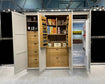
Freestanding larders are particularly versatile because they do not necessarily require major changes to existing kitchen cabinetry.
They can often be positioned wherever suitable floor and wall space is available.
A freestanding larder cupboard may contain multiple shelves, drawers or internal door storage, providing considerable capacity within a relatively small footprint.
Another advantage is flexibility.
If the kitchen layout changes in the future, freestanding larders can potentially be repositioned rather than being permanently incorporated into fitted cabinetry.
Tall Larders
Tall larders make effective use of vertical space.
Instead of increasing the width of a cupboard, they extend storage upwards, which can be particularly valuable in smaller UK kitchens where floor area is limited.
A tall larder can provide numerous shelving levels for separating different categories of food and household supplies.
The upper shelves can hold products used occasionally, while frequently accessed ingredients remain around eye or waist level.
Narrow Larders
Narrow larders are useful where available width is restricted.
A relatively slim storage cupboard can potentially fit beside existing kitchen units, within an alcove or against an unused section of wall.
Although narrower than conventional cupboards, their height can provide surprisingly substantial storage capacity.
For smaller kitchens, this combination of a narrow footprint and vertical storage can be particularly effective.
Double-Door Larders
For households requiring greater capacity, double-door larders provide a wider storage area.
Opening both doors gives a clear overview of the cupboard contents, which can make organisation considerably easier.
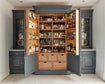
Some designs incorporate storage racks on the inside of the doors, creating additional space for smaller jars, bottles, packets and condiments.
Small Larders
Not every household requires a huge pantry cupboard.
Small larders can provide useful additional storage without dominating the room. They may be particularly appropriate for flats, apartments, compact kitchens and smaller households.
The important consideration is not simply overall size but how effectively the internal space is arranged.
Larders vs Traditional Kitchen Cupboards
Traditional kitchen cupboards remain essential, but larders perform a different role.
Standard cabinets distribute storage throughout the kitchen. This works well for cookware, crockery and everyday utensils, but food can become fragmented across numerous locations.
A larder provides centralisation.
Instead of pasta in one cupboard, cereal in another, sauces somewhere else and baking ingredients in a separate drawer, these products can potentially be grouped within one organised storage zone.
This improves visibility.
When food is hidden across deep cupboards, duplicate purchases become more likely because people forget what they already have.
An organised larder makes it easier to see available supplies before shopping.
How Larders Can Maximise Kitchen Storage
The major advantage of larders is storage density.
A carefully designed tall cupboard can utilise vertical space that might otherwise remain unused.
Shelving can be arranged at different heights to accommodate everything from small spice containers to large cereal boxes.
Internal doors can also become valuable storage surfaces.
Door-mounted shelves are particularly useful for smaller products because these items often become lost behind larger containers on deep shelves.
Efficient larders use almost every available part of the cupboard.
Choosing the Right Size Larder
Before purchasing a larder, carefully measure the intended location.
Measure:
- Available width
- Available height
- Available depth
- Skirting board projection
- Nearby door clearance
- Distance from radiators
- Space required for cupboard doors to open
- Position of sockets and switches
- Nearby kitchen cabinet doors
Do not assume that a cupboard will fit simply because its stated width is smaller than the available wall.
Door opening clearance can be equally important.
You should also consider how the larder will affect movement through the kitchen.
A deep cupboard positioned in a narrow walkway could make the room feel considerably smaller.
Larders for Small UK Kitchens
Small kitchens require particularly careful storage planning.
The objective should be to maximise capacity without making the room feel overcrowded.
Tall, narrow larders can work especially well because they exploit vertical space rather than consuming excessive floor area.
Look for internal layouts that provide multiple storage levels.
Adjustable shelves are particularly valuable because they allow the interior to be adapted according to what you actually store.
For example, you might require:
- Taller sections for cereal boxes
- Medium shelves for jars and tins
- Small shelves for spices
- Lower areas for heavier items
- Door storage for condiments
A well-planned small larder can sometimes eliminate the need for several separate storage units.
Where Should Larders Be Positioned?
Location can have a significant impact on usability.
Ideally, larders should be positioned somewhere convenient to the main food preparation area without obstructing movement.
Popular locations include:
- Beside kitchen cabinets
- Against an unused wall
- Inside an alcove
- Near the refrigerator
- Close to food preparation surfaces
- Within a utility area
- Near the entrance to the kitchen
Consider your daily routine.
If you regularly retrieve breakfast ingredients, cooking oils, herbs and sauces, positioning the larder within easy reach of your preparation area can save considerable movement.
Avoid locations where open doors could block important walkways.
How to Organise Larders Properly
Good organisation can dramatically increase the usefulness of larders.
Rather than simply filling shelves with products, divide the cupboard into logical zones.
Everyday Foods
Keep frequently used products around eye level or slightly below.
These might include:
- Pasta
- Rice
- Cereals
- Tea
- Coffee
- Sauces
- Cooking oils
- Everyday seasonings
Frequently used products should generally occupy the most accessible areas.
Baking Supplies
Create a dedicated baking section containing products such as flour, sugar, baking powder, chocolate, cake decorations and other ingredients.
Keeping these products together means you can immediately see what is available before beginning a recipe.
Tinned Foods
Tins are relatively heavy, so storing large quantities on lower or structurally stronger shelves can make sense.
Arrange similar products together.
For example, keep vegetables, beans, soups and tinned fruits in separate groups.
Snacks
A dedicated snack area can prevent packets from becoming scattered throughout the kitchen.
Baskets or containers can be particularly helpful for smaller snack packets.
Occasional Ingredients
Products that are only used occasionally can be stored higher up.
This preserves prime shelf space for everyday essentials.
Using Larders to Reduce Food Waste
An organised larder can also help reduce unnecessary food waste.
When cupboard contents are clearly visible, it becomes easier to identify products approaching their best-before dates.
A simple rotation system can help.
Place newer purchases behind existing products and move older products towards the front.
This basic "first in, first out" approach encourages older supplies to be used first.
Regularly checking larders before grocery shopping can also reduce duplicate purchases.
Deep Shelves vs Shallow Shelves in Larders
Deep shelves provide greater overall capacity but can create visibility problems.
Products positioned at the back may become difficult to see.
Shallow shelves offer easier access but naturally provide less storage depth.
For many households, a combination works best.
Large products can occupy deeper lower shelves, while jars, tins and packets benefit from shallower or raised storage.
Shelf risers can also improve visibility by creating different heights.
The Benefits of Adjustable Shelving
Adjustable shelving is one of the most useful features available in modern larders.
Household storage requirements change over time.
One month you may need space for large cereal boxes; another month you may want additional shelving for tins or jars.
Fixed shelves restrict flexibility.
Adjustable shelves allow internal spacing to evolve alongside your requirements.
They can also prevent wasted vertical gaps above shorter products.
Larders With Door Storage
Door storage is an efficient way to increase capacity without substantially increasing the external dimensions of the cupboard.
Internal racks can hold:
- Spice jars
- Sauces
- Condiments
- Small bottles
- Packets
- Baking products
- Seasonings
These smaller items can otherwise disappear behind larger products.
Door storage keeps them visible and accessible.
However, avoid excessively loading door racks beyond their intended capacity.
Larders for Open-Plan Kitchens
Open-plan kitchens create particular storage challenges because the kitchen is continuously visible from surrounding living areas.
Cluttered worktops can therefore affect the appearance of the entire room.
Large larders can help consolidate everyday kitchen products behind closed doors.
Once closed, the cupboard creates a clean visual surface while concealing substantial amounts of storage.
This combination of practicality and visual simplicity makes larders particularly suitable for modern open-plan living.
Choosing Larders to Complement Your Kitchen Style
Storage is important, but appearance matters too.
Because larders can be relatively large pieces of furniture, their colour and design can influence the overall character of a kitchen.
White Larders
White larders can create a bright, clean appearance.
They are particularly versatile and can work alongside numerous kitchen styles.
In smaller rooms, lighter colours may also help prevent tall furniture from appearing visually heavy.
Grey Larders
Grey has become a popular kitchen colour because it combines easily with different materials and tones.
Grey larders can suit contemporary, industrial and more traditional interiors depending on the shade and door design.
Black Larders
Black larders can create a strong visual statement.
They can work particularly well in larger kitchens or interiors using contrasting light worktops and walls.
Oak-Effect and Wood-Effect Larders
Wood-effect finishes introduce warmth and texture.
They can complement both traditional kitchens and contemporary interiors where natural materials form part of the design.
Traditional Larders for Classic Interiors
Traditional-style larders often feature framed or shaker-inspired doors, handles and furniture-like proportions.
This style can work particularly well in period properties, cottages and kitchens designed around classic cabinetry.
A freestanding traditional larder can look less like a conventional storage cabinet and more like a substantial piece of kitchen furniture.
That makes it possible to add considerable storage without creating an overly utilitarian appearance.
Modern Larders for Contemporary Homes
Modern larders typically emphasise simplicity.
Clean lines, minimal detailing and streamlined handles can help the cupboard integrate with contemporary interiors.
Internally, modern organisation tends to focus on accessibility and flexibility.
Adjustable shelving, dedicated compartments and intelligent use of vertical space can be more important than decorative details.
What Can You Store in Larders?
Larders are extremely versatile.
Depending on their construction and internal layout, they can potentially store:
- Dry food
- Tinned food
- Pasta
- Rice
- Cereals
- Flour
- Sugar
- Herbs
- Spices
- Sauces
- Tea
- Coffee
- Snacks
- Baking supplies
- Bottled drinks
- Kitchen textiles
- Cookbooks
- Serving dishes
- Small kitchen appliances
- Cleaning supplies
Food and cleaning products should ideally be kept clearly separated.
If both categories must occupy the same cupboard, use distinct compartments and ensure household chemicals are safely stored.
Can Larders Store Kitchen Appliances?
Larger larders can potentially provide storage for appliances that otherwise occupy valuable worktop space.
Items such as mixers, blenders, slow cookers and similar appliances may be stored on lower shelves when not required.
Always consider weight.
Heavy appliances should generally be positioned lower down rather than on high shelves.
This makes them easier and safer to retrieve while reducing unnecessary strain on shelving.
How to Keep Larders Clean and Organised
Even beautifully organised larders require occasional maintenance.
Every few weeks, check for:
- Empty packets
- Expired products
- Spills
- Crumbs
- Duplicate ingredients
- Damaged containers
Remove everything shelf by shelf and wipe surfaces using a suitable cleaning method for the cupboard material.
Allow surfaces to dry before replacing food.
This is also an ideal opportunity to reorganise categories and bring older products forward.
Common Mistakes When Choosing Larders
One common mistake is choosing purely according to external appearance.
A cupboard may look attractive but provide an internal configuration unsuitable for your requirements.
Another mistake is buying the largest possible larder without considering room proportions.
More storage is useful, but oversized furniture can make smaller kitchens feel cramped.
Other common mistakes include failing to measure door clearance, ignoring skirting boards, overlooking shelf adjustability and failing to consider what will actually be stored.
Think about contents first and dimensions second.
Are Larders Worth It?
For households struggling with kitchen storage, larders can be extremely worthwhile.
They provide a dedicated location for products that might otherwise occupy numerous cabinets and worktops.
Their usefulness extends beyond simple capacity.
A well-organised larder can make shopping easier, food preparation faster and inventory management more efficient.
Instead of opening multiple cupboards to locate ingredients, you have one centralised storage area.
That simplicity can improve everyday kitchen routines considerably.
Larders for Family Homes
Busy family kitchens can benefit particularly strongly from additional pantry-style storage.
Larger households often keep greater quantities of cereals, snacks, drinks, pasta, tins and everyday ingredients.
Without dedicated storage, these products can quickly overwhelm conventional cabinets.
A family larder can be divided into specific zones.
For example, lower accessible sections might contain appropriate everyday products, while less frequently required items can remain higher up.
Clear organisation also makes it easier for everyone in the household to return products to the correct place.
Larders for Bulk Buying
Buying larger quantities of non-perishable food can be economical, but only when sufficient storage exists.
Larders can provide space for additional packets, tins and household essentials.
However, bulk storage requires organisation.
Avoid placing several identical products in different areas. Keep them grouped together so quantities remain immediately visible.
Otherwise, the supposed financial benefit of bulk buying can disappear through unnecessary duplicate purchases.
How Larders Can Make Kitchens Feel Less Cluttered
One of the greatest advantages of larders is their ability to hide visual clutter.
Imagine removing cereal boxes, bread products, snack packets, jars, appliances and bottles from your worktops and placing them behind cupboard doors.
The physical dimensions of the kitchen remain unchanged, yet the room can immediately feel larger.
Clear worktops also provide more usable preparation space.
This is why effective storage can influence not only organisation but the entire experience of using a kitchen.
Planning Larders Around Everyday Habits
The most successful storage systems are designed around behaviour rather than appearance alone.
Think about what you reach for every day.
Tea and coffee might need to remain easily accessible. Baking supplies could occupy a dedicated section. Breakfast foods might work better together.
Arrange your larder according to frequency of use.
Frequently used items belong within comfortable reach.
Occasional products can go higher.
Heavy items should generally remain lower.
Small products benefit from shallow shelves, door racks or containers.
This simple hierarchy makes larders considerably easier to use.
Future-Proofing Your Kitchen Storage
Storage requirements rarely remain static.
Families grow, cooking habits change and new appliances appear.
Choosing flexible larders can therefore be more valuable than choosing an interior layout designed around your current possessions alone.
Adjustable shelves and generous internal space provide room for future changes.
Neutral external designs can also adapt more easily if the kitchen is redecorated.
Measuring Doorways Before Buying Large Larders
One detail that can easily be overlooked is access to the room itself.
Even if the larder fits perfectly once positioned, it still needs to reach that location.
Check relevant:
- Entrance doors
- Hallways
- Staircases
- Kitchen doorways
- Corners
- Ceiling heights
This is particularly important for larger furniture.
Where a larder requires assembly, check whether it is supplied flat-packed or assembled and make sure sufficient room is available for construction.
Creating a Dedicated Pantry Zone With Larders
You do not necessarily need a separate pantry room to achieve organised pantry storage.
A carefully positioned larder can create a dedicated pantry zone within the existing kitchen.
Larger kitchens might use multiple complementary cupboards for different purposes.
One could contain everyday dry food while another accommodates appliances, baking equipment or occasional supplies.
This modular approach provides many of the organisational advantages of a walk-in pantry without requiring structural alterations.
Why Larders Remain Relevant in Modern British Homes
Kitchen trends constantly change, but practical storage remains essential.
That is why larders have survived the transition from traditional food-storage rooms to modern kitchen furniture.
Their purpose has evolved, but their fundamental value remains the same.
They give household essentials a dedicated place.
Modern lifestyles arguably make this more valuable than ever. Households own more appliances, have access to wider varieties of ingredients and frequently require storage for larger grocery shops.
At the same time, contemporary interior design increasingly favours uncluttered surfaces.
Larders solve both problems simultaneously.
They increase storage while allowing the visible kitchen to remain cleaner and more organised.
Choosing the Best Larders for Your Home
The best larders are not necessarily the biggest or most elaborate.
They are the ones that suit the available space and the way your household actually uses the kitchen.
Before choosing, ask yourself:
How much available floor space do I have?
What products do I need to store?
Would a tall or narrow cupboard make better use of the room?
Do I need adjustable shelving?
Would internal door storage be useful?
Do I need space for appliances?
Which finish suits the existing kitchen?
Can the doors open completely?
Will the cupboard interfere with walkways?
Answering these questions will help narrow down your options.
Final Thoughts on Larders
Larders have moved far beyond their traditional role as cool food-storage rooms.
Modern larders are flexible, practical pieces of kitchen furniture designed to improve organisation, maximise available space and reduce everyday clutter.
For smaller kitchens, a tall or narrow larder can exploit vertical space that might otherwise go unused. For larger households, wide or double-door larders can create substantial pantry-style storage. For open-plan homes, enclosed storage can keep everyday food and appliances hidden from view.
The key is choosing a design based on how you genuinely use your kitchen.
Consider dimensions carefully, prioritise accessible shelving and organise products according to frequency of use. A thoughtfully selected larder can transform previously scattered kitchen storage into one practical, centralised system.
Whether you are renovating your kitchen, looking for additional food storage or simply tired of overcrowded cupboards, larders provide a remarkably straightforward solution.
Their enduring popularity makes sense.
A good kitchen needs somewhere for everything to go, and sometimes the simplest way to create a more organised home is to give everything its own place.
FAQ SECTION
What are larders used for?
Modern larders are primarily used for storing dry food, tins, packets, jars, baking ingredients, drinks and other kitchen essentials. Larger models may also provide storage for small appliances, cookware and household supplies.
Are larders still popular in the UK?
Yes. Larders have become increasingly relevant to modern kitchen design because they provide substantial organised storage while helping keep worktops and conventional cupboards less cluttered.
What is the difference between larders and pantries?
Traditionally, a pantry was generally a room or dedicated area used for storing food and kitchen provisions, while a larder historically provided cooler storage for perishable products. Today, the terms are often used more broadly, particularly when referring to pantry cupboards and freestanding larders.
Are larders suitable for small kitchens?
Yes. Tall and narrow larders can be particularly useful in small kitchens because they maximise vertical storage while occupying relatively little floor space.
Where should I put a larder in my kitchen?
Ideally, position your larder somewhere accessible from your main food preparation area without obstructing walkways, doors or other kitchen cupboards. Alcoves, unused walls and spaces beside existing cabinetry can all potentially work well.
What size larder should I buy?
The right size depends on your available space and storage requirements. Measure the width, depth and height of the intended location and check door-opening clearance before making a decision.
What should I store at the bottom of a larder?
Lower shelves are generally suitable for heavier products, bulk supplies and appliances. Keeping heavier objects lower makes them easier and safer to retrieve.
What should I store at eye level?
Frequently used ingredients are usually best positioned around eye level. This might include pasta, rice, sauces, cereal, tea, coffee and everyday cooking ingredients.
Are freestanding larders practical?
Freestanding larders can be extremely practical because they provide substantial additional storage without necessarily requiring changes to existing fitted kitchen cabinets.
Can larders be used for appliances?
Depending on shelf strength and available dimensions, larger larders may be suitable for storing smaller kitchen appliances when they are not being used. Heavy appliances should generally remain on lower shelves.
How do you organise deep larders?
Group similar products together and use containers, baskets or shelf risers where appropriate. Avoid creating multiple rows of identical-height products where items at the back become impossible to see.
How can larders help reduce food waste?
Keeping ingredients visible and organised makes it easier to identify what you already have and which products should be used soon. Placing older products towards the front can also encourage effective stock rotation.
Should larders have adjustable shelves?
Adjustable shelving is highly useful because it allows you to alter the internal layout according to changing storage requirements and different product heights.
What colours are popular for larders?
White, grey, black and wood-effect finishes are versatile choices for UK kitchens. The best option depends on the surrounding cabinetry, flooring, worktops and overall interior style.
Can a larder replace several kitchen cupboards?
Potentially, yes. Large larders can consolidate food and household products that might otherwise occupy several smaller cabinets. The actual capacity depends on the cupboard dimensions and internal configuration.
Are tall larders good for storage?
Tall larders can provide excellent storage because they utilise vertical space efficiently. They are particularly useful where floor space is limited but sufficient ceiling height is available.
Do larders need ventilation?
Modern cupboard-style larders used for conventional dry food storage do not necessarily function like traditional ventilated larders. Always follow appropriate storage instructions for individual food products and avoid using ordinary cupboards as substitutes for refrigeration where chilled storage is required.
Can I use a larder outside the kitchen?
Yes. Depending on its design, a freestanding larder cupboard may also be suitable for a utility room, dining area or another appropriate indoor space where additional enclosed storage is required.
How often should I clean my larder?
A quick check every few weeks can help maintain organisation, while periodic deeper cleaning allows shelves to be wiped down and expired or unwanted products removed.
Are larders worth buying?
For households requiring additional kitchen storage, larders can be a highly practical investment. They can increase usable storage, improve organisation, reduce visible clutter and make everyday ingredients easier to locate.