- No products in the cart.




LARDER CUPBOARDS: THE BRITISH KITCHEN STORAGE REVIVAL YOU DIDN’T KNOW YOUR HOME WAS WAITING FOR

31
Mar
Larder cupboards are no longer just a nostalgic nod to traditional British kitchens. They have become one of the most practical, stylish, and high-impact storage solutions for modern homes. Whether you are redesigning a family kitchen, improving a compact space, or simply looking for a smarter way to organise food, appliances, and everyday essentials, larder cupboards offer a brilliant balance of beauty and function.
Across the UK, homeowners are searching for better kitchen storage that feels tidy, intentional, and easy to live with. That is exactly where larder cupboards stand out. They help reduce clutter, improve workflow, and create a dedicated home for dry goods, jars, snacks, cookware, and even hidden countertop appliances.
If you are researching larder cupboards because you want to make your kitchen work harder and look better, this guide covers everything you need to know. From sizes and styles to layout ideas, internal storage, buying advice, and common mistakes to avoid, this is your complete practical guide to choosing the right larder cupboard for your home.
Why Larder Cupboards Are So Popular in UK Kitchens
The rise of larder cupboards in British homes is not a passing trend. It reflects how people actually want to live.
Modern kitchens are expected to do more than ever. They are cooking spaces, family hubs, work-from-home zones, social areas, and storage centres all at once. Standard cupboards and drawers can quickly become overwhelmed, especially in busy households.
Larder cupboards solve this problem by creating one tall, dedicated storage zone that can hold far more than a row of base cabinets ever could. Instead of scattering food and kitchen items across multiple cupboards, you can keep everything in one accessible place.
This makes them especially appealing for:
- family kitchens with lots of groceries
- open-plan homes where clutter is more visible
- smaller kitchens that need vertical storage
- homeowners who want a cleaner, more organised layout
- people planning a kitchen refresh without wasting space
Larder cupboards also appeal to UK homeowners because they suit both traditional and contemporary interiors. Whether your home leans farmhouse, shaker, minimalist, country, modern, or classic, there is a larder cupboard style that fits naturally.
What Are Larder Cupboards?
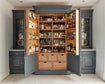
Larder cupboards are tall kitchen storage units designed to hold food, pantry items, and kitchen essentials in an organised and accessible way. Unlike standard wall or base cabinets, they use height to maximise storage while often including internal shelves, drawers, racks, or pull-out systems.
Traditionally, a larder was a cool room or cupboard used for storing food. Today’s larder cupboards take that same concept and adapt it for modern living.
A typical larder cupboard may include:
- full-height shelving
- internal door racks
- deep storage compartments
- drawers for packets and tins
- appliance storage zones
- pull-out trays or baskets
- dedicated sections for baking, breakfast, or dry food
Some larder cupboards are freestanding, while others are integrated into fitted kitchen layouts. Both options can work beautifully depending on your space and how much flexibility you want.
The Key Benefits of Larder Cupboards
1. They Make Kitchens Feel Instantly More Organised
One of the biggest advantages of larder cupboards is how quickly they reduce visual and practical chaos. Instead of opening multiple cupboards to find pasta, cereal, tea, sauces, or snacks, everything can live in one well-planned place.
This makes cooking easier, shopping more efficient, and tidying up far less frustrating.
2. They Maximise Vertical Storage
In many UK kitchens, floor space is limited. Larder cupboards use vertical space brilliantly, giving you far more storage capacity without needing a larger footprint.
This is particularly useful in smaller terraced homes, flats, and galley kitchens where every inch matters.
3. They Help Keep Worktops Clear
Worktop clutter is one of the fastest ways to make a kitchen feel cramped and messy. Larder cupboards can hide away bulky packaging, small appliances, and backup supplies so your kitchen feels cleaner and more spacious.
4. They Improve Everyday Kitchen Flow
Good kitchen design is not just about looks. It is about movement. A well-positioned larder cupboard can make meal prep, unpacking shopping, and family life much more efficient.
5. They Add a Premium Feel to the Kitchen
There is something undeniably elevated about a kitchen with a proper larder cupboard. It gives the room a more intentional, bespoke feel and often becomes one of the most useful features in the entire home.
Types of Larder Cupboards for UK Homes
Not all larder cupboards are the same. The best option depends on your kitchen size, layout, and how you plan to use it.
Freestanding Larder Cupboards
Freestanding larder cupboards are ideal if you want flexibility or are not doing a full fitted kitchen renovation. They work well in:
- traditional kitchens
- utility rooms
- dining kitchens
- rented homes where fitted changes are limited
- period properties with more character-led interiors
They often offer a furniture-style look, which can make the kitchen feel warmer and less built-in.
Integrated Larder Cupboards
Integrated larder cupboards are designed to sit seamlessly within fitted kitchen cabinetry. These are ideal for a sleek, built-in appearance and are often chosen in:
- modern kitchens
- new kitchen renovations
- open-plan living spaces
- minimalist kitchen layouts
They create a cleaner overall look and can be tailored more precisely to your kitchen design.
Single Larder Cupboards
A single larder cupboard is a tall, narrow unit with one main door and internal shelving or storage features. This is often the best option for smaller kitchens or homes where you want to add pantry storage without dominating the room.
Double Larder Cupboards
Double larder cupboards provide much more internal storage and often create a striking centrepiece. These are ideal for:
- family kitchens
- keen home cooks
- bulk shoppers
- households that need dedicated food organisation
They are especially useful if you want to create zones inside for breakfast, baking, dry food, snacks, or hidden appliances.
Slimline Larder Cupboards
Slimline larder cupboards are excellent for awkward or narrow spaces. If you have a gap between units or a compact kitchen footprint, a slimline design can still offer meaningful storage without overwhelming the room.
How to Choose the Right Larder Cupboards for Your Kitchen
Choosing the right larder cupboards is not just about appearance. It is about matching storage to the way you actually use your kitchen.
Measure Your Space Properly
Before anything else, measure:
- width
- height
- depth
- door clearance
- nearby appliance access
- walking space around the cupboard
A larder cupboard may look perfect online, but if the doors cannot open comfortably or it blocks workflow, it will quickly become frustrating.
Think About What You Want to Store
A common mistake is buying larder cupboards based only on appearance rather than use. Ask yourself what will actually go inside.
For example:
- dry food and pantry staples
- cereal, snacks, and packed lunches
- tea, coffee, and breakfast items
- baking ingredients and equipment
- microwave, toaster, or air fryer
- pet food and household extras
Your storage needs should shape the internal layout you choose.
Prioritise Internal Practicality
Beautiful doors mean very little if the inside does not work. Good larder cupboards should help you see, reach, and organise your items easily.
Look for:
- adjustable shelves
- useful shelf depth
- internal door storage
- drawer compartments
- baskets or pull-outs
- appliance-friendly sections
- solid, easy-clean interiors
Match the Style to Your Kitchen
Larder cupboards should feel like a natural part of the room. Consider:
- colour
- finish
- handle style
- plinth or leg design
- traditional vs contemporary lines
- how it works with your other cabinetry or furniture
In UK kitchens, neutral shades such as white, cream, grey, stone, sage, navy, and oak-effect finishes remain especially popular.
Best Internal Storage Ideas for Larder Cupboards
The real magic of larder cupboards is inside. A well-organised interior can transform how your kitchen works every day.
1. Pantry Zoning
Divide your larder cupboard into categories such as:
- breakfast
- pasta and rice
- tins and jars
- snacks
- baking
- tea and coffee
- sauces and oils
This makes everything easier to find and maintain.
2. Use Clear Containers Where Helpful
Decanting some dry goods into clear containers can make your larder cupboards feel tidier and help you spot what needs topping up. It is especially useful for flour, cereal, pasta, rice, and snacks.
3. Keep Everyday Items at Eye Level
The most frequently used items should be easiest to reach. Reserve higher or lower shelves for backups, seasonal items, or less-used ingredients.
4. Add Baskets for Loose Items
Packets, pouches, and small items can become messy quickly. Baskets or bins help keep categories together and prevent shelves from becoming chaotic.
5. Create an Appliance Garage Area
Some larger larder cupboards can house appliances such as:
- kettle
- toaster
- microwave
- coffee machine
- air fryer
This is a great way to reduce worktop clutter while keeping essentials easily accessible.
Are Larder Cupboards Good for Small Kitchens?
Yes, and in many cases they are one of the smartest storage choices you can make.
There is a common misconception that larder cupboards only suit large kitchens. In reality, they can be even more valuable in smaller spaces because they use height so effectively.
In a compact UK kitchen, a single tall larder cupboard can often store more than several scattered cabinets. That means fewer overstuffed drawers, less visual clutter, and a more functional room overall.
For smaller kitchens, the best approach is usually:
- a slim or single-width larder cupboard
- good internal organisation
- careful placement near prep areas
- neutral finishes to keep the room feeling open
If space is tight, avoid overly bulky designs and focus on practicality first.
Best Places to Position Larder Cupboards
Where you place your larder cupboard matters just as much as what you put in it.
The ideal position depends on your kitchen layout, but common options include:
Near the Main Prep Zone
This is one of the most practical placements. If your ingredients are stored close to where you cook and prepare food, the kitchen feels much more efficient.
Near the Fridge
Many households naturally access fridge items and pantry items together when cooking. Positioning larder cupboards near the fridge can improve meal prep flow.
At the End of a Run of Cabinets
This can create a neat visual anchor in the kitchen and often works especially well in fitted layouts.
In an Unused Corner or Wall Space
A freestanding larder cupboard can sometimes transform an awkward blank wall into highly valuable storage.
In a Utility Room or Adjacent Space
If your kitchen is compact, placing larder cupboards in a utility room, boot room, or dining area can still work brilliantly.
Popular Styles of Larder Cupboards in the UK
Homeowners across the UK are using larder cupboards in a wide range of interior styles. The best one for your home depends on the atmosphere you want to create.
Shaker Style Larder Cupboards
These are timeless, versatile, and hugely popular in British kitchens. They work well in both traditional and transitional interiors and pair beautifully with neutral colour palettes.
Modern Flat-Front Larder Cupboards
For sleek, contemporary homes, flat-front larder cupboards create a clean and minimal look. These are especially effective in handleless or streamlined kitchen designs.
Country-Style Larder Cupboards
These often feature warmer finishes, classic detailing, and a more furniture-like feel. They suit farmhouse-inspired and cosy kitchen schemes beautifully.
Painted Larder Cupboards
Painted finishes remain a favourite in UK homes. Shades such as muted green, soft grey, deep blue, and off-white can add character without overwhelming the room.
Oak and Wood-Effect Larder Cupboards
Wood tones bring warmth and texture into the kitchen and can soften more modern layouts while still feeling practical and timeless.
Common Mistakes to Avoid When Buying Larder Cupboards
Even the best-looking larder cupboards can disappoint if the details are wrong. Here are some of the most common mistakes to avoid.
Buying Based Only on Looks
Style matters, but usability matters more. Always think about what you will actually store and how you want the cupboard to function day to day.
Ignoring Shelf Depth
Shelves that are too deep can make items disappear at the back. Shelves that are too shallow may not be practical for real kitchen use. Aim for a balance.
Forgetting Door Clearance
Tall cupboard doors need room to open fully. Always check nearby walls, islands, appliances, and walkways.
Underestimating Internal Organisation
Without some internal planning, even large larder cupboards can become cluttered. Think in categories and zones from the start.
Choosing the Wrong Colour for the Space
Darker colours can look stunning, but in a very small or low-light kitchen, a lighter finish may help the room feel more open.
How Larder Cupboards Can Improve Daily Life
One of the biggest reasons people love larder cupboards is that the benefit is not just visual. It is practical.
They can help you:
- unpack shopping faster
- reduce duplicate purchases
- keep children’s snacks in one area
- create better meal prep routines
- make your kitchen easier to clean
- reduce countertop mess
- feel more in control of the space
That might sound simple, but when your kitchen is used every single day, small improvements have a huge impact over time.
A well-organised larder cupboard often becomes one of those features people wonder how they ever lived without.
Are Larder Cupboards Worth It?
For most UK households, yes, absolutely.
Larder cupboards are one of the few kitchen storage additions that combine:
- style
- practicality
- long-term usefulness
- broad design appeal
- everyday convenience
They are especially worthwhile if your current kitchen feels cluttered, awkward, or lacking in dedicated food storage.
The key is choosing a design that genuinely suits your space and lifestyle rather than simply following a trend. Done well, larder cupboards can transform not only how your kitchen looks, but how it feels to use every day.
Final Thoughts on Choosing the Best Larder Cupboards
If you want a kitchen that feels calmer, more functional, and better organised, larder cupboards are one of the smartest upgrades you can make.
They help bring order to busy homes, improve kitchen flow, and make storage feel far more intentional. Whether you choose a freestanding piece with furniture-like charm or a fitted option that blends seamlessly into your kitchen, the right larder cupboard can add real value to your home life.
The best larder cupboards are not just attractive. They are useful. They suit the size of your kitchen, the way you cook, and the reality of everyday living.
If you are planning a kitchen update, improving your storage, or simply trying to make better use of your space, larder cupboards deserve a serious place on your shortlist.
FAQ SECTION
What are larder cupboards used for?
Larder cupboards are mainly used for storing food, pantry staples, snacks, jars, tins, baking ingredients, and kitchen essentials. Many people also use them to store small appliances and household extras.
Are larder cupboards good for small kitchens?
Yes, larder cupboards are excellent for small kitchens because they use vertical space efficiently. A tall cupboard can often store far more than several standard cabinets.
What is the difference between a pantry and a larder cupboard?
In modern UK homes, the terms are often used similarly. A pantry usually refers to a food storage area, while a larder cupboard is a tall cabinet designed to create that same organised pantry-style storage within the kitchen.
Can larder cupboards be freestanding?
Yes, many larder cupboards are freestanding. These are ideal if you want flexibility, furniture-style character, or a storage upgrade without a full fitted kitchen renovation.
Where should larder cupboards go in a kitchen?
Larder cupboards work best near the main prep area, near the fridge, or at the end of a run of cabinets. The best placement depends on your kitchen layout and daily routine.
Are larder cupboards worth it in UK homes?
For many households, yes. Larder cupboards can improve organisation, reduce clutter, keep worktops clearer, and make kitchens easier to use every day.
What should I store in a larder cupboard?
You can store dry food, cereal, pasta, rice, baking ingredients, sauces, tea, coffee, snacks, tins, jars, and in some cases small appliances like toasters or coffee machines.
What colour larder cupboards are most popular?
Popular choices in UK kitchens include white, cream, grey, sage green, navy, and oak-effect finishes. The best colour depends on your kitchen style and how light or spacious the room feels.