- No products in the cart.




LARDER CUPBOARDS: THE COMPLETE UK GUIDE TO CREATING A KITCHEN THAT STORES MORE AND FEELS LESS CLUTTERED

18
Aug
A well-organised kitchen can completely change how a home feels and functions. When food, cookware, small appliances and everyday essentials all have a proper place, preparing meals becomes easier, surfaces remain clearer and the entire room can feel more spacious. This is one of the main reasons larder cupboards have become such a practical storage choice for UK homes.
Modern larder cupboards combine generous storage capacity with the convenience of having essential kitchen items organised in one dedicated location. Rather than spreading tins, packets, jars, baking ingredients and kitchen equipment across several wall and base units, a well-designed larder can bring everything together in a much more accessible way.
They can work particularly well in kitchens where floor space is valuable. By taking advantage of vertical storage, larder cupboards can provide substantial capacity without necessarily requiring a huge footprint.
Whether you are planning a complete kitchen renovation, replacing existing furniture or simply looking for a better way to organise an overcrowded kitchen, understanding the different types, sizes and layouts available can help you choose a cupboard that genuinely improves your space.
This comprehensive UK guide explores what larder cupboards are, their benefits, different styles and sizes, what you can store inside them, where to position them and what to consider before choosing one for your home.
What are larder cupboards?
Larder cupboards are tall storage units primarily designed to provide organised kitchen storage within a relatively compact footprint.
Traditionally, a larder was a separate cool room or pantry used for storing food. As homes and kitchens evolved, dedicated pantry rooms became less common, particularly in smaller properties. The modern larder cupboard provides many of the organisational advantages of a traditional pantry without requiring a separate room.
Depending on the design, larder cupboards may include a combination of:
- Adjustable shelves
- Fixed internal shelves
- Drawers
- Door-mounted storage racks
- Internal compartments
- Bottle storage
- Open shelving
- Lower cupboards
- Upper cupboards
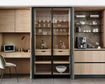
- Worktop-style preparation areas
Some are relatively narrow and straightforward, while larger models can become substantial pieces of freestanding kitchen furniture.
The central idea remains the same: making better use of available space by creating a dedicated, easily accessible storage area.
Why larder cupboards are becoming increasingly popular in UK kitchens
Kitchen storage requirements have changed significantly. Modern households often need room for far more than plates, pans and a few tins of food.
A typical kitchen may contain breakfast cereals, pasta, rice, sauces, spices, baking supplies, snacks, drinks, cleaning products, small electrical appliances, reusable containers and bulk purchases.
Without an effective storage system, these items can quickly occupy multiple cupboards and valuable worktop space.
Larder cupboards provide an opportunity to consolidate many of these products.
They are particularly useful for households that do not have a traditional walk-in pantry or utility room. Instead of undertaking major structural alterations to create additional storage, adding a suitable larder unit can provide an immediate improvement.
Their popularity also reflects a wider preference for kitchens that look calmer and less cluttered. Having a large amount of concealed storage makes it easier to keep everyday products away from visible surfaces.
The biggest benefits of larder cupboards
The appeal of larder cupboards extends beyond simply having another cupboard. The right design can change how kitchen storage is used on a daily basis.
Excellent use of vertical space
One of their greatest advantages is height.
In many kitchens, available wall height is significantly underused. A tall larder cupboard takes storage upwards rather than requiring considerably more floor area.
This can be especially valuable in smaller UK kitchens where every square metre matters.
Centralised food storage
Instead of keeping food across numerous cupboards, you can create a dedicated pantry-style area.
Pasta can sit alongside rice and grains. Baking products can occupy another shelf. Tins, jars and sauces can have their own sections.
This can make it considerably easier to see what you already have before shopping.
Less kitchen clutter
Clear worktops can make even a modest kitchen appear larger.
Items that might otherwise remain permanently on display can potentially be stored inside a sufficiently spacious larder.
Depending on the dimensions and shelf configuration, this could include bread bins, coffee supplies, mixers, blenders or other smaller appliances.
Easier organisation
Large storage capacity is useful, but organised capacity is even better.
Shelves and compartments allow items to be grouped by type, frequency of use or household member.
A good organisational system can make preparing meals quicker because commonly used ingredients are easy to locate.
Flexible storage
Many larder cupboards include adjustable shelving.
This is particularly useful because kitchen products come in dramatically different shapes and sizes. Tall bottles require different clearance from tins, while cereal boxes need considerably more height than spice jars.
Being able to alter shelf positions allows the cupboard to evolve with your requirements.
Different types of larder cupboards for UK homes
There is no single design that suits every kitchen. Understanding the main configurations will help narrow down your options.
Freestanding larder cupboards
Freestanding larder cupboards are individual pieces of furniture rather than permanent fitted cabinetry.
They can be particularly appealing when you want substantial additional storage without replacing an entire kitchen.
Depending on the design and installation requirements, they may also provide greater flexibility over positioning than fully integrated cabinetry.
Freestanding models are available in traditional, contemporary and transitional designs, making them suitable for everything from country-style kitchens to modern interiors.
Tall larder cupboards
Tall larder cupboards maximise vertical storage.
These units are ideal when the objective is to achieve substantial capacity from a relatively modest amount of floor space.
A tall cupboard can potentially replace several smaller storage areas, making it especially useful in kitchens where wall and floor space are limited.
Before purchasing a tall unit, always measure ceiling height and check for obstacles such as coving, radiators, sockets and light fittings.
Narrow larder cupboards
A narrow larder cupboard can be an excellent solution for kitchens with limited available width.
Rather than leaving an awkward section of wall unused, a slim storage unit can turn it into valuable pantry space.
Narrow cupboards can be particularly suitable for flats, terraced homes, galley kitchens and smaller modern properties.
Width should not be considered in isolation, however. A tall, narrow cupboard can still provide impressive capacity when the internal space has been designed effectively.
Wide larder cupboards
For larger households or kitchens with sufficient room, wider larder cupboards provide much greater storage possibilities.
These units may contain several doors, multiple internal sections, drawers and substantial shelving.
A wide larder can effectively create a pantry zone within the kitchen without requiring a separate pantry room.
Double larder cupboards
Double larder cupboards usually provide two main door sections and a wider interior.
They are useful when you want to divide storage into categories. One side might hold everyday food while the other stores baking ingredients, drinks or appliances.
The increased width also makes it easier to see products without everything being stacked behind something else.
Triple larder cupboards
For households requiring particularly generous kitchen storage, triple larder cupboards can provide an extensive amount of internal space.
These larger units can act as major kitchen storage centres, potentially combining food storage, cookware, appliances and household essentials in one piece of furniture.
Because of their size, accurate measurements are particularly important.
Choosing the right size larder cupboard
Choosing the largest cupboard that physically fits is not always the best approach.
The objective should be finding a unit that provides useful capacity while maintaining comfortable movement around the kitchen.
Before ordering, measure:
- Overall available width
- Maximum available height
- Available depth
- Distance to nearby furniture
- Door clearance
- Walkway space
- Skirting boards
- Radiators
- Plug sockets
- Window positions
- Existing kitchen doors
Measure at several points rather than assuming walls and floors are perfectly straight.
Older UK properties in particular can have uneven walls, floors and alcoves.
You should also consider how the cupboard doors will open. A unit may technically fit the available wall space while still being impractical if its doors collide with another cupboard, table or doorway.
Larder cupboard depth: why it matters
Depth is one of the most overlooked measurements when choosing kitchen storage.
A deeper cupboard provides greater capacity, but greater depth is not automatically better.
Very deep shelves can make smaller products difficult to see because items become hidden behind one another.
Shallower larder cupboards can sometimes be more practical for food storage because jars, tins and packets remain visible and accessible.
Depth is especially important in:
- Galley kitchens
- Narrow kitchens
- Utility rooms
- Hallway pantry areas
- Small flats
- Kitchens with central islands
Always consider both internal storage capacity and how far the cupboard projects into the room.
Where should you put a larder cupboard?
The ideal position depends on your kitchen layout and how you intend to use the unit.
A larder cupboard should ideally be convenient enough that you can reach frequently used ingredients without repeatedly crossing the kitchen.
Popular locations include the end of a run of kitchen units, an unused wall, a wide alcove or an area near the main food preparation zone.
Think about the natural sequence of preparing meals.
If you frequently retrieve pasta, rice, spices and sauces while cooking, having the larder reasonably close to the preparation and cooking areas can make sense.
However, avoid positioning furniture where it restricts walkways or interferes with doors and appliances.
What can you store in larder cupboards?
One of the biggest advantages of larder cupboards is versatility.
A well-organised unit can accommodate an enormous range of kitchen essentials.
Dry foods
Common choices include:
- Pasta
- Rice
- Flour
- Sugar
- Cereals
- Oats
- Grains
- Pulses
- Crackers
- Biscuits
- Dried fruit
Grouping similar items together makes stock management much easier.
Tins and jars
Tinned vegetables, beans, soups, preserves, sauces and condiments are ideal pantry items.
Keeping labels facing forwards can make products much easier to identify.
Baking supplies
Households that bake regularly can create a dedicated baking shelf containing flour, sugar, raising agents, decorations, flavourings and other ingredients.
Snacks
One shelf or basket can be reserved for everyday snacks.
This prevents individually packaged foods from spreading across multiple cupboards.
Drinks
Depending on shelf strength and dimensions, a larder can provide storage for tea, coffee, bottled drinks and other beverages.
Always consider the additional weight created by storing multiple bottles together.
Small kitchen appliances
Larger larder cupboards may accommodate appliances that would otherwise occupy worktop space.
The suitability of a particular shelf for heavier appliances should always be checked before use.
Larder cupboards with door storage
Door-mounted storage is one of the most useful features available on certain larder cupboard designs.
The inside surface of a door is otherwise largely unused space. Adding racks or shallow shelves transforms this area into accessible storage for smaller products.
Door racks may be useful for:
- Herbs and spices
- Sauces
- Small jars
- Packets
- Baking ingredients
- Condiments
They also reduce the likelihood of small items disappearing towards the back of deep shelves.
When considering a cupboard with door storage, check the dimensions and weight restrictions of the racks.
How to organise larder cupboards effectively
Buying a spacious cupboard is only the first step. The way you organise it determines how useful it becomes.
Keep everyday products at eye level
Frequently used products should generally occupy the easiest shelves to reach.
There is little benefit in placing everyday cereal or pasta on the highest shelf while rarely used products occupy prime storage positions.
Put heavier items lower down
Heavy bottles, larger appliances and bulk products are usually better positioned on lower shelves where appropriate.
This can make them easier to lift and helps avoid unnecessary strain.
Use upper shelves for occasional items
Higher shelves are ideal for lightweight products or items that are only needed occasionally.
Create categories
Instead of filling shelves randomly, establish simple categories.
For example:
Breakfast
Cooking ingredients
Baking
Tinned food
Snacks
Drinks
Spare supplies
This makes it easier for everyone in the household to maintain the system.
Rotate older products forwards
When adding new groceries, move existing products towards the front.
This simple habit helps prevent older food being forgotten.
Larder cupboards for small kitchens
Small kitchens often benefit most from carefully planned storage.
When floor area is limited, using height efficiently becomes extremely important.
A tall, relatively narrow larder cupboard can provide considerably more capacity than several small pieces of furniture while maintaining a compact footprint.
For a small kitchen, consider:
- Narrower widths
- Shallower depths
- Tall designs
- Adjustable shelving
- Door-mounted racks
- Light finishes
- Simple door designs
You should also pay particular attention to door swing and walkway clearance.
The objective is to increase storage without making the room feel cramped.
Larder cupboards for large kitchens
Larger kitchens provide more freedom.
A wide or multi-door larder can become a major feature of the room rather than simply supplementary storage.
In open-plan kitchens, a freestanding larder cupboard can also provide visual structure by creating a distinct storage zone.
Larger households may choose to dedicate different sections to different functions, such as everyday groceries, bulk supplies, baking equipment and appliances.
The additional capacity can be particularly valuable for families that shop less frequently and purchase larger quantities at once.
Traditional larder cupboards
Traditional larder cupboards can add character as well as storage.
Typical design details may include panelled doors, cornices, classic handles and furniture-inspired proportions.
These styles work particularly well in country kitchens, cottages, period homes and interiors where a softer, more traditional appearance is preferred.
A freestanding traditional larder can look like an intentional piece of furniture rather than standard fitted cabinetry.
Modern larder cupboards
Modern larder cupboards generally favour simpler lines and understated detailing.
They can work particularly well in contemporary kitchens where clean surfaces and minimal visual clutter are important.
Modern does not necessarily mean stark. A simple cupboard can still introduce warmth depending on its finish, handles and surrounding furniture.
The key consideration is ensuring the external design complements the wider kitchen while the interior provides the practical storage you require.
White larder cupboards
White larder cupboards remain an extremely versatile choice for UK homes.
White furniture can help a kitchen feel lighter and works alongside a broad range of wall colours, worktops, flooring and existing cabinets.
It can be particularly effective in smaller rooms where darker furniture might visually dominate the available space.
White also suits numerous interior styles, from traditional country kitchens to contemporary schemes.
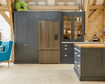
Grey larder cupboards
Grey larder cupboards offer a neutral alternative while providing slightly more visual depth.
Depending on the shade, grey can complement timber, stone-effect worktops, neutral walls and modern kitchen finishes.
Lighter greys can retain an airy appearance, while deeper shades can create a stronger statement.
Black larder cupboards
A black larder cupboard can create a dramatic focal point, particularly in larger kitchens.
Black works particularly effectively when contrasted with lighter walls or worktops.
However, the visual weight of dark furniture should be considered carefully in very small rooms or spaces with limited natural light.
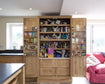
Wooden and oak-effect larder cupboards
Wooden and wood-effect finishes can introduce warmth and texture into a kitchen.
They can complement both traditional and modern interiors depending on the door style and overall design.
Natural-looking finishes are particularly useful when you want the larder to feel more like a freestanding piece of furniture.
Freestanding larder cupboards versus fitted kitchen storage
Both approaches have advantages.
Fitted cabinetry can provide a highly integrated appearance and may allow awkward spaces to be utilised precisely. However, adding fitted units can sometimes require more extensive planning and installation.
Freestanding larder cupboards provide a different kind of flexibility.
They can be useful when:
- The existing kitchen is staying in place
- Additional storage is needed quickly
- There is an unused wall or alcove
- A furniture-style appearance is preferred
- A full kitchen renovation is unnecessary
The best option depends on your room, budget and long-term plans.
Larder cupboards for utility rooms
A larder cupboard does not necessarily have to sit in the main kitchen.
Utility rooms can be excellent locations for overflow food storage, household products and less frequently used kitchen equipment.
Moving bulk purchases and occasional items into a utility-room larder can free significant space within the kitchen itself.
Just make sure the environment is suitable for whatever you intend to store.
Can larder cupboards replace a pantry?
For many households, yes.
A well-designed large larder cupboard can provide much of the practical functionality associated with a small pantry.
It cannot replicate the physical space of a walk-in pantry, but it can provide dedicated, organised food storage without requiring structural alterations.
For homes where creating a separate pantry is unrealistic, a tall or wide larder can therefore be an excellent compromise.
How to make larder cupboards look good in your kitchen
Function matters, but so does appearance.
Start by considering the existing colours and materials in your kitchen.
The cupboard does not necessarily need to match every existing unit exactly. In some interiors, a contrasting freestanding piece can look intentional and create an attractive focal point.
Consider:
- Cabinet colour
- Door design
- Handle style
- Height
- Width
- Surrounding furniture
- Flooring
- Worktop finish
- Wall colour
Proportion is particularly important.
A very large cupboard squeezed into a small space may look overpowering, while a narrow unit on an enormous empty wall may appear undersized.
Common mistakes when choosing larder cupboards
Several avoidable mistakes can reduce the usefulness of otherwise excellent storage.
Measuring only once
Always double-check measurements before purchasing.
Ignoring door clearance
Make sure doors can open sufficiently without hitting nearby furniture or walls.
Focusing only on external dimensions
Internal dimensions determine what you can actually store.
Choosing capacity without considering accessibility
An enormous cupboard is less useful if products become impossible to reach or see.
Forgetting shelf configuration
Think about what you actually intend to store and whether the shelf spacing accommodates those products.
Blocking sockets or radiators
Check the complete wall area before deciding on placement.
Ignoring delivery access
Large pieces of furniture need to reach their final location.
Measure entrance doors, hallways, staircases and any tight corners involved in the delivery route.
What to consider before buying larder cupboards in the UK
Before choosing a particular model, ask yourself several practical questions.
How much storage do you genuinely need?
Where will the cupboard stand?
What are the maximum width, depth and height available?
What products will you store?
Do you need adjustable shelves?
Would door-mounted storage be useful?
Will you store heavy appliances?
Does the cupboard need to complement existing kitchen furniture?
Can the unit be delivered easily into the property?
Answering these questions before shopping makes comparing different larder cupboards considerably easier.
How larder cupboards can help create a more efficient kitchen
The most effective kitchens are not necessarily the biggest.
Efficiency comes from putting the right things in the right places.
Larder cupboards can support this by concentrating frequently used ingredients within one accessible storage area.
Instead of searching through multiple cabinets, you can create a clear pantry system where products are visible and logically grouped.
This can make meal preparation faster, shopping easier and kitchen organisation more manageable.
It may also help reduce unnecessary duplicate purchases because you can see existing supplies more easily.
Are larder cupboards worth it?
For households struggling with kitchen storage, larder cupboards can be an extremely practical investment.
Their biggest advantage is the combination of capacity, organisation and efficient use of vertical space.
A suitable larder can:
- Increase usable kitchen storage
- Reduce worktop clutter
- Organise dry foods
- Make ingredients easier to locate
- Provide space for bulk purchases
- Store occasional appliances
- Create pantry-style storage
- Make better use of unused wall space
The key is choosing the correct dimensions and internal configuration rather than simply selecting the biggest unit available.
Creating the right larder storage solution for your home
Every household uses its kitchen differently.
A couple living in a city flat may need a narrow cupboard for everyday groceries. A family may require a large double or triple unit capable of holding a substantial weekly shop. Someone who enjoys baking may prioritise shelves for ingredients and equipment, while another household may want somewhere to hide small appliances.
This is why the best larder cupboards are not simply those with the greatest capacity. They are the ones that match the way you actually use your kitchen.
Start with your available space, then consider what needs to be stored. Look carefully at width, height and depth, followed by shelving, compartments and door storage.
When those elements work together, a larder cupboard can become one of the hardest-working pieces of furniture in the kitchen.
Final thoughts on choosing larder cupboards
Larder cupboards offer a simple solution to one of the most common challenges in British kitchens: creating enough accessible storage without sacrificing unnecessary floor space.
From narrow larder cupboards for compact kitchens to substantial multi-door designs for larger family homes, there are options for an enormous range of properties and layouts.
The best choice should provide enough capacity for your household while remaining proportionate to the room. Accurate measurements, thoughtful positioning and a sensible internal organisation system are therefore just as important as appearance.
If your current kitchen feels overcrowded, your worktops are constantly covered or groceries are spread across multiple cabinets, introducing dedicated pantry-style storage could make a significant difference.
A carefully chosen larder cupboard does more than provide somewhere to put food. It can create a more organised kitchen, simplify everyday routines and help you make much better use of the space already available within your home.
FAQ Section
What are larder cupboards used for?
Larder cupboards are primarily used for organised kitchen and pantry storage. They are particularly suitable for dry foods, tins, jars, cereals, baking ingredients, snacks, drinks and other everyday kitchen essentials. Larger designs may also provide room for small appliances and cookware.
Are larder cupboards suitable for small kitchens?
Yes. Tall and narrow larder cupboards can be particularly useful in small kitchens because they maximise vertical storage while using relatively little floor area. Always check the cupboard depth and door clearance to ensure the unit does not restrict movement.
What size larder cupboard should I choose?
The correct size depends on your available space and storage requirements. Measure the maximum width, height and depth available and consider how much clearance is required for doors and surrounding furniture.
What is the best depth for larder cupboards?
There is no single ideal depth. Deeper cupboards provide greater overall capacity, while shallower cupboards can make smaller products easier to see and reach. The best option depends on the size of your kitchen and what you intend to store.
Can I use larder cupboards as a pantry?
Yes. Larder cupboards are frequently used to create pantry-style storage in homes without a separate pantry. Shelves can be organised into categories for dry foods, tins, baking products, snacks and other household supplies.
Where is the best place to put a larder cupboard?
Ideally, place it somewhere convenient for food preparation without restricting walkways or access to appliances. Unused kitchen walls, alcoves, utility rooms and the end of existing cabinet runs can all be suitable depending on the layout.
Are freestanding larder cupboards better than fitted ones?
Neither is automatically better. Freestanding cupboards can be convenient when you want additional storage without redesigning the entire kitchen, while fitted cupboards can create a more integrated appearance. Your existing kitchen and available space should determine the best approach.
Are narrow larder cupboards practical?
Yes. A narrow cupboard can provide considerable storage when height is used efficiently. They can be especially practical in galley kitchens, flats and smaller UK homes where floor space is limited.
What should I store at the top of a larder cupboard?
Higher shelves are generally best for lightweight and less frequently used items. Everyday products are usually more convenient around eye level, while heavier items should be kept lower down where suitable.
Can kitchen appliances be stored in larder cupboards?
Potentially, provided the internal dimensions, shelf strength and manufacturer's guidance are suitable for the weight and size of the appliance. Always check load limits before placing heavy equipment on shelves.
Are larder cupboards good for family kitchens?
They can be particularly useful for families because they provide a central location for groceries, snacks, cereals, drinks and cooking ingredients. Larger double or triple designs can offer substantial capacity for bigger households.
How do I organise a larder cupboard?
Group similar products together, keep frequently used items within easy reach, place heavier products lower down and reserve higher shelves for occasional items. Rotating older food towards the front can also help reduce forgotten products and waste.
What colour larder cupboard works best in a small kitchen?
Lighter colours such as white, cream and pale grey can help maintain a brighter, more open appearance. However, the best colour ultimately depends on your existing cabinets, flooring, walls and personal interior style.
Do larder cupboards need adjustable shelves?
They do not necessarily need them, but adjustable shelves can provide greater flexibility. They allow the internal layout to accommodate everything from short tins and jars to taller bottles, cereal boxes and kitchen equipment.
Can larder cupboards be used outside the kitchen?
Yes. Depending on the cupboard and environment, they can also be useful in utility rooms, dining areas or other suitable spaces where additional household storage is required.
What should I measure before ordering a larder cupboard?
Measure the available width, depth and height as well as doorways, hallways and other access points required during delivery. Check skirting boards, sockets, radiators, windows, existing cabinets and the space needed for the cupboard doors to open.
Are tall larder cupboards a good use of space?
Yes. Tall larder cupboards can make excellent use of vertical space and are particularly effective when floor area is limited. Their height allows several storage levels to occupy a relatively compact footprint.
How can I stop food getting lost at the back of a larder cupboard?
Organise products into categories and avoid unnecessarily deep rows of small items. Keeping similar products together and regularly rotating stock can improve visibility. Door-mounted racks can also be useful for smaller products.
Can larder cupboards help reduce kitchen clutter?
Yes. By providing dedicated storage for groceries and potentially some smaller appliances, larder cupboards can free up other cabinets and worktop areas. This can help the kitchen feel cleaner, calmer and better organised.
What are the best larder cupboards for UK homes?
The best larder cupboards are those that suit the available space, household size and intended storage requirements. Smaller kitchens may benefit from tall narrow designs, while larger family kitchens may be better suited to wide, double or triple cupboards with extensive internal shelving.