- No products in the cart.




LARDER CUPBOARDS: REDEFINING STORAGE, ORDER, AND EVERYDAY LIVING IN UK HOMES

27
Jan
Introduction: storage is no longer a background detail
Larder Cupboards have moved from being an afterthought in kitchen design to becoming one of the most deliberate and valued features in UK homes. This shift has not happened by accident. As lifestyles have changed, kitchens have been forced to do more with less space, more activity, and higher expectations. Storage, once hidden and secondary, is now central to how a kitchen functions and feels.
For many households, frustration with clutter, overcrowded cupboards, and wasted space is what triggers the search for better solutions. Larder Cupboards answer that need by offering height, structure, and organisation in a single unit. They are not about excess, but about efficiency. Not about trends, but about usability.
This article explores Larder Cupboards in depth, focusing on how they support real British homes, how to plan them intelligently, and why they continue to grow in popularity across all types of properties.
What larder cupboards actually are
Larder Cupboards are tall kitchen storage units designed to store food, kitchen supplies, and sometimes small appliances in a single, organised space. Unlike standard cupboards, they are defined by their vertical orientation and internal flexibility.
Historically, the larder was a separate room used for food storage, common in older UK homes. As property sizes reduced and layouts modernised, that room disappeared. Larder Cupboards are the modern interpretation of the same idea, condensed into a practical footprint that fits today’s kitchens.
What makes them distinct is not just their size, but their purpose. They are designed to be opened frequently, accessed easily, and kept organised without constant effort.
Why larder cupboards suit British homes so well
The appeal of Larder Cupboards in the UK is closely linked to how homes are built and used.
Limited kitchen space
Many UK kitchens, especially in older properties and city homes, are compact. Floor space is precious, and adding more base units often makes a room feel crowded. Larder Cupboards use vertical space instead, increasing capacity without increasing clutter.
Weekly and bulk shopping
UK households commonly shop weekly or rely on grocery deliveries. This means storing larger volumes of food at once. A larder provides dedicated space for this, rather than spreading items across multiple cupboards.
Open-plan living
As kitchens increasingly connect to dining and living areas, visible mess becomes a design issue. Larder Cupboards conceal everyday items behind clean, simple doors, helping maintain a calm environment.
Busy routines
Modern households need kitchens that support speed and simplicity. Having all food and essentials in one place reduces time spent searching and reorganising.
Different types of larder cupboards explained
Understanding the variations helps you choose the right option for your space.
Single larder cupboards
These are tall, narrow units ideal for smaller kitchens or households with moderate storage needs. They fit neatly into gaps and offer excellent vertical storage.
Double larder cupboards
Wider and more spacious, double Larder Cupboards suit family kitchens or homes where cooking plays a central role. They allow clear separation between different types of items.
Pantry-style larder cupboards
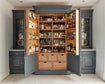
These feature shelving on the inside of the doors as well as inside the main cavity. When opened, everything is visible, reducing forgotten items and improving stock control.
Pull-out larder cupboards
Designed with internal sliding mechanisms, these cupboards pull forward to reveal contents. They are particularly useful in tight layouts where door clearance is limited.
Integrated larder cupboards
Integrated designs match surrounding cabinetry, creating a seamless look. This approach is popular in kitchens aiming for a clean, uniform appearance.
Where larder cupboards work best in a kitchen
Placement has a significant impact on usability.
Near food preparation areas
Positioning Larder Cupboards close to the main worktop reduces unnecessary movement during cooking.
Beside major appliances
Placing a larder near ovens or fridges creates an efficient cooking zone.
At the end of a cabinet run
This is a common solution in UK kitchens, as it avoids interrupting worktop space while providing a visual anchor.
As a design feature
In larger kitchens, Larder Cupboards can frame appliances or form symmetrical layouts that feel intentional and balanced.
What you can store in larder cupboards
One of the strengths of Larder Cupboards is versatility.
Dry goods
Pasta, rice, flour, cereals, tins, and jars are easily organised and visible.
Cooking essentials
Oils, spices, sauces, and condiments benefit from being stored together in one accessible place.
Small appliances
Blenders, mixers, air fryers, and slow cookers can be stored out of sight but within easy reach.
Baking supplies
Flours, sugars, trays, and tools can be grouped logically, making baking more enjoyable.
Household overflow
Some households also store items like lunch boxes, pet food, or cleaning supplies in their larder.
Internal features that make larder cupboards effective
The interior design determines whether a larder is genuinely useful.
Adjustable shelves
These allow the cupboard to adapt to different item heights and changing needs.
Pull-out drawers
Drawers bring contents forward, preventing items from being forgotten at the back.
Wire baskets
These improve airflow and visibility, particularly useful for packaged foods.
Door-mounted storage
Using the inside of doors maximises space and keeps smaller items organised.
Internal lighting
Lighting improves visibility and adds a premium feel, especially in deeper cupboards.
Choosing the right size
Correct proportions ensure your Larder Cupboards enhance the kitchen rather than overwhelm it.
Height
Full-height units maximise storage but must suit ceiling height and room scale.
Width
Slim cupboards fit narrow spaces, while wider units suit larger households.
Depth
Deeper cupboards store more but benefit from pull-out mechanisms for accessibility.
Materials and finishes that suit UK kitchens
The finish affects both appearance and longevity.
Painted finishes
These work well in both traditional and contemporary kitchens and are easy to refresh over time.
Wood and wood-effect finishes
These add warmth and suit period properties or natural design schemes.
Matt finishes
Practical for everyday use, reducing glare and fingerprints.
Consistency with cabinetry
Matching finishes create a cohesive look, while contrasting finishes can highlight the larder as a feature.
Larder cupboards in small kitchens
Compact kitchens often benefit the most from Larder Cupboards.
Replacing multiple cupboards
One tall unit can replace several smaller cupboards, simplifying the layout.
Reducing clutter
Fewer doors and handles create a calmer visual impression.
Improving workflow
Everything in one place makes cooking quicker and less stressful.
Larder cupboards in larger kitchens
In spacious kitchens, Larder Cupboards bring order and structure.
Creating zones
Separating storage from preparation and cleaning areas improves flow.
Supporting entertaining
Bulk storage keeps kitchens tidy even when hosting guests.
Enhancing design balance
Tall cupboards add vertical interest and architectural presence.
Why families benefit from larder cupboards
Family households often rely heavily on Larder Cupboards.
Clear organisation
Designated shelves reduce confusion and save time.
Accessibility
Lower shelves can hold snacks, while higher shelves store bulk items.
Adaptability
Adjustable interiors evolve as children grow and routines change.
Larder cupboards and sustainable living
Good storage supports more mindful habits.
Reducing food waste
Clear visibility helps ensure items are used before expiry.
Encouraging home cooking
Organised kitchens make cooking at home more appealing.
Supporting bulk buying
Storing dry goods in larger quantities reduces packaging waste.
Common planning mistakes to avoid
Even the best cupboard can disappoint if poorly planned.
Ignoring internal layout
A tall cupboard without proper organisation becomes inefficient.
Poor placement
Doors that clash with walkways or appliances reduce usability.
Overfilling
Leaving space helps maintain order and accessibility.
Maintenance and organisation tips
Keeping Larder Cupboards functional is straightforward.
Regular reviews
Check contents every few months and remove unused items.
Storage containers
Clear containers improve visibility and freshness.
Labelling
Simple labels reduce duplicate purchases and confusion.
Cleaning
Wipe shelves regularly to maintain hygiene.
Are larder cupboards a good long-term investment?
For most UK households, Larder Cupboards offer lasting value. They improve daily routines, reduce stress, and make kitchens more enjoyable to use. Because they address fundamental storage needs, they remain relevant regardless of changing design trends.
They also contribute to a more organised home overall, often extending their usefulness beyond the kitchen itself.
Conclusion: the lasting role of larder cupboards
Larder Cupboards are not a passing trend. They reflect a broader shift towards practical, intentional home design that prioritises how spaces are actually used.
As UK homes continue to balance limited space with busy lifestyles, the need for smart storage will only increase. Larder Cupboards meet that need by combining efficiency, organisation, and adaptability in a single solution.
Whether you are planning a full kitchen renovation or simply looking to improve storage, Larder Cupboards offer a reliable, long-term answer. In modern British homes, they have become an essential component of kitchens that truly work for everyday life.