- No products in the cart.




LARDER CUPBOARDS: THE HIDDEN ARCHITECTURE OF A PERFECTLY ORGANISED BRITISH HOME

27
Jan
Introduction: why larder cupboards matter more than ever
Larder Cupboards have quietly become one of the most important pieces of furniture in modern UK homes. As kitchens evolve from purely functional rooms into social, multi-use spaces, storage has had to work harder, look better, and adapt to changing lifestyles. Whether you live in a compact city flat, a Victorian terrace, or a modern family home, the way you store food, appliances, and household essentials affects how your entire kitchen feels and functions.
In recent years, more homeowners have realised that cluttered worktops, overflowing cupboards, and awkward corner units create daily friction. Larder Cupboards solve these issues by centralising storage, improving visibility, and turning chaos into calm. They offer a practical solution to modern living while adding visual structure and balance to a kitchen layout.
This guide explores everything you need to know about Larder Cupboards: what they are, why they are so popular in the UK, how to choose the right one, where they work best, and how they can transform the way you use your kitchen every single day.
What are larder cupboards?
Larder Cupboards are tall storage units designed primarily for food and kitchen essentials. Traditionally, a larder referred to a cool room used to store bread, meat, and pantry items. In today’s homes, the concept has evolved into a vertical cupboard that maximises height and internal organisation.
Unlike standard base or wall cabinets, Larder Cupboards usually extend from floor to near ceiling. Inside, they often feature multiple shelves, pull-out baskets, spice racks, or door-mounted storage, allowing you to see and access everything at a glance.
In UK homes where kitchen space is often limited, Larder Cupboards provide a way to increase storage capacity without increasing the footprint of the kitchen.
Why larder cupboards have become essential in UK kitchens
Several lifestyle shifts have driven the popularity of Larder Cupboards across the UK.
First, shopping habits have changed. Many households now do fewer, larger food shops. Bulk buying, online grocery deliveries, and stocking up on essentials all require dedicated, well-organised storage.
Second, kitchens have become open-plan. When your kitchen is visible from your living or dining area, clutter is no longer something you can ignore. Larder Cupboards hide everyday items behind clean lines, helping maintain a calm, cohesive space.
Third, modern cooking trends rely on variety. Herbs, spices, oils, grains, sauces, small appliances, and specialist ingredients quickly overwhelm traditional cupboards. A larder provides a single, logical home for everything.
Finally, UK homes are getting smarter about space. Vertical storage makes sense in properties where extending outward is difficult or impossible.
Types of larder cupboards
Not all Larder Cupboards are the same. Choosing the right type depends on your kitchen size, layout, and storage needs.
Full height larder cupboards
These are the most common style and extend from floor level to near the ceiling. They maximise storage and create a strong visual anchor within the kitchen. Full height Larder Cupboards work particularly well in modern and shaker-style kitchens.
Slim larder cupboards
Slim Larder Cupboards are ideal for narrow gaps, such as beside an oven or fridge. Despite their width, they often include pull-out internal mechanisms that make excellent use of every centimetre.
Double larder cupboards
A double larder features two tall doors and a wider internal space. This option suits family kitchens or homes where cooking is a central activity. It allows for zoning, such as dedicating one side to food and the other to appliances.
Pantry-style larder cupboards
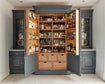
Pantry Larder Cupboards often include internal drawers, baskets, and door storage. When opened, everything is visible at once. This style is inspired by traditional walk-in pantries but adapted for modern homes.
Integrated larder cupboards
These are designed to blend seamlessly with the rest of your kitchen cabinetry. Integrated Larder Cupboards maintain a consistent look, making the kitchen feel larger and more cohesive.
Where larder cupboards work best in a kitchen layout
Placement is key to getting the most out of Larder Cupboards.
Near the food preparation area
Positioning your larder close to your main worktop makes cooking more efficient. Ingredients are easy to grab, and everything returns to its place quickly.
Adjacent to appliances
Placing a larder beside an oven, fridge, or microwave creates a practical cooking zone. This setup works particularly well in galley kitchens or compact layouts.
At the end of a kitchen run
In many UK kitchens, Larder Cupboards are placed at the end of a run of cabinets. This creates a natural visual stop and avoids breaking up worktop space.
As a focal point
In larger kitchens, a pair of Larder Cupboards can frame an appliance or create a symmetrical, built-in look that feels intentional and high-end.
Internal features that make larder cupboards practical
The real power of Larder Cupboards lies inside.
Adjustable shelving
Adjustable shelves allow you to tailor the cupboard to your needs. Tall cereal boxes, small jars, and bulky appliances can all coexist without wasted space.
Pull-out shelves and baskets
Pull-out systems bring contents forward, so nothing gets lost at the back. This is particularly useful in deep Larder Cupboards where visibility matters.
Door-mounted storage
Many Larder Cupboards use the inside of the door for spices, condiments, or narrow items. This turns otherwise unused space into functional storage.
Soft-close mechanisms
Soft-close doors and drawers reduce noise and wear, making the cupboard more pleasant to use every day.
Ventilation considerations
Good airflow is important for food storage. Well-designed Larder Cupboards allow air to circulate, helping keep dry goods fresh.
Choosing the right size larder cupboard
Selecting the correct size ensures your Larder Cupboard feels like a solution, not a compromise.
Height considerations
In UK homes with higher ceilings, taller Larder Cupboards create a built-in look and maximise storage. In lower ceiling spaces, slightly shorter units prevent the room from feeling cramped.
Width options
Widths vary from slim 300mm units to wider double cupboards. Consider what you plan to store and how often you access items.
Depth matters
Deeper cupboards offer more storage but can be harder to organise. Internal pull-outs can help balance depth with accessibility.
Materials and finishes for larder cupboards
The material and finish you choose affect both durability and style.
Painted finishes
Painted Larder Cupboards suit both modern and traditional kitchens. Neutral tones are popular in the UK, as they age well and adapt to changing trends.
Wood finishes
Wood or wood-effect finishes add warmth and texture. They work particularly well in period properties or kitchens aiming for a natural look.
Matt versus gloss
Matt finishes reduce glare and fingerprints, making them practical for everyday use. Gloss finishes reflect light and can make smaller kitchens feel brighter.
Durability considerations
Because Larder Cupboards are opened frequently, robust construction and quality hinges are essential.
How larder cupboards improve everyday life
Beyond aesthetics, Larder Cupboards make daily routines easier.
Faster meal preparation
Knowing exactly where everything is saves time and reduces stress, especially during busy weekdays.
Reduced food waste
When ingredients are visible and organised, items are less likely to be forgotten or expire unused.
Cleaner worktops
With appliances and food stored away, worktops stay clear, making the kitchen easier to clean and more enjoyable to use.
Better household organisation
Many households use part of a larder for non-food items like lunch boxes, cleaning supplies, or pet food, creating a central organisation hub.
Larder cupboards in small UK kitchens
Small kitchens benefit greatly from Larder Cupboards.
Vertical storage advantage
Using height rather than floor space allows even compact kitchens to store a surprising amount.
Replacing multiple cupboards
One well-designed larder can replace several wall and base units, simplifying the layout.
Creating visual calm
Tall cupboards reduce visual clutter by hiding items behind a single façade, making small kitchens feel larger.
Larder cupboards in family homes
For families, Larder Cupboards are a practical investment.
Zoning for different users
Lower shelves can hold snacks for children, while higher shelves store adult-only items or bulk goods.
Managing busy routines
Having everything in one place makes school mornings and meal planning far smoother.
Adapting as needs change
As families grow, storage needs evolve. Adjustable interiors allow Larder Cupboards to adapt over time.
Larder cupboards and sustainability
Larder Cupboards can support more sustainable living.
Encouraging bulk buying
Storing dry goods in bulk reduces packaging waste and frequent trips to the shop.
Supporting home cooking
Well-organised kitchens make cooking at home more appealing, reducing reliance on takeaways.
Reducing waste
Clear visibility helps households use what they have, cutting down on food waste.
Common mistakes to avoid when choosing larder cupboards
Even the best idea can fall short if poorly planned.
Ignoring internal layout
A tall cupboard without thoughtful internal features can become a dumping ground.
Choosing style over function
While appearance matters, daily usability should come first.
Underestimating access space
Ensure there is enough room to fully open doors and pull-out shelves.
Not planning for future needs
Think about how your lifestyle might change in the coming years.
Maintaining and organising larder cupboards
A little maintenance goes a long way.
Regular decluttering
Every few months, review contents and remove expired or unused items.
Using storage containers
Clear containers help keep items fresh and improve visibility.
Labelling
Simple labels save time and prevent duplicate purchases.
Cleaning routines
Wipe shelves regularly to keep the cupboard hygienic and pleasant to use.
Are larder cupboards worth the investment?
For most UK households, the answer is yes. Larder Cupboards combine storage efficiency, visual appeal, and long-term practicality. They enhance daily life, support better organisation, and add value to a kitchen without requiring major structural changes.
Unlike trend-driven features that may date quickly, Larder Cupboards address a fundamental need: organised storage. This makes them a timeless addition to both modern and traditional homes.
Conclusion: the future of kitchen storage
Larder Cupboards represent a shift towards smarter, more intentional living. As UK homes continue to adapt to busy lifestyles, open-plan layouts, and evolving cooking habits, the demand for efficient storage will only grow.
By choosing the right Larder Cupboards, homeowners create kitchens that are easier to use, calmer to be in, and better suited to everyday life. Whether you are planning a full kitchen redesign or simply upgrading your storage, Larder Cupboards offer a solution that blends practicality with lasting style.
In a world where space is precious and time is limited, well-designed Larder Cupboards are no longer a luxury. They are an essential part of a functional, organised, and enjoyable home.