- No products in the cart.




THE HIDDEN POWER OF PANTRY CUPBOARDS: HOW ONE SIMPLE KITCHEN FEATURE CAN TRANSFORM STORAGE, ORGANISATION AND EVERYDAY LIFE

10
Mar
The modern kitchen has evolved far beyond a simple space for cooking meals. Today, kitchens are multifunctional environments where families gather, meals are prepared, and everyday routines unfold. As kitchens become more central to daily life, the importance of effective storage has never been greater.
Among the most practical and transformative storage solutions available today are pantry cupboards. These versatile kitchen units provide dedicated space for food storage, helping households stay organised while keeping ingredients easily accessible. In many homes across the UK, pantry cupboards are quickly becoming an essential part of kitchen design.
This guide explores everything homeowners need to know about pantry cupboards, from their benefits and styles to how to choose the right one for your kitchen. Whether you are redesigning your kitchen or simply looking to improve your storage, understanding the role of pantry cupboards can help you create a more efficient and enjoyable cooking space.
WHY PANTRY CUPBOARDS ARE BECOMING ESSENTIAL IN MODERN UK KITCHENS
In recent years, kitchen storage trends in the UK have shifted significantly. Homeowners increasingly want kitchens that feel calm, organised, and clutter free. The growing popularity of pantry cupboards reflects this change.
Pantry cupboards provide a dedicated place to store dry foods, cooking ingredients, snacks, and household essentials. Instead of spreading these items across multiple cabinets, a pantry cupboard centralises food storage in one convenient location.
This offers several advantages.
First, pantry cupboards make it easier to see what you have. When ingredients are stored together in an organised space, it reduces the chance of buying duplicates or forgetting items that are already in your kitchen.
Second, pantry cupboards free up valuable worktop and cupboard space. When food storage is consolidated into one unit, other kitchen cabinets can be used more efficiently for cookware, appliances, and utensils.
Third, pantry cupboards help maintain a visually tidy kitchen. By keeping food items hidden behind doors, they contribute to a cleaner and more streamlined kitchen appearance.
Finally, pantry cupboards support better meal planning. When ingredients are clearly visible and easy to access, preparing meals becomes quicker and more convenient.
THE HISTORY AND EVOLUTION OF PANTRY CUPBOARDS
The concept of pantry cupboards has a long history. Traditional British homes often included a pantry or larder room, typically located near the kitchen. These cool storage spaces were designed to keep food fresh before modern refrigeration existed.
In older homes, pantries were used to store bread, preserves, vegetables, and other staples. Shelves lined the walls, providing space to organise household provisions.
As homes became smaller and kitchens more compact, dedicated pantry rooms gradually disappeared. However, the need for organised food storage never went away.
This led to the development of modern pantry cupboards. Instead of an entire room, these tall kitchen units replicate the function of traditional pantries within a single cabinet.
Today’s pantry cupboards combine the practicality of historic food storage with modern design features such as adjustable shelving, internal drawers, and door racks. They allow homeowners to enjoy the benefits of a pantry even in smaller kitchens.
DIFFERENT TYPES OF PANTRY CUPBOARDS
One of the reasons pantry cupboards are so popular is the wide variety of styles available. Different types of pantry cupboards suit different kitchen layouts and storage needs.
Freestanding pantry cupboards
Freestanding pantry cupboards are standalone units that can be placed anywhere in the kitchen. They are particularly useful in kitchens where fitted cabinetry is limited or where homeowners want flexible storage options.
Freestanding units often resemble tall cupboards or dressers. They typically feature shelves inside and doors that conceal stored items. Because they are not permanently fixed, they can easily be repositioned if the kitchen layout changes.
Tall kitchen pantry cupboards
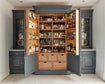
Tall pantry cupboards are designed to integrate seamlessly with fitted kitchen cabinetry. These units usually extend from floor to near ceiling height, maximising vertical storage space.
Tall pantry cupboards are ideal for households that store a large quantity of food or dry ingredients. Their height allows multiple shelves to be installed, creating clearly organised sections for different types of items.
Pull-out pantry cupboards
Pull-out pantry cupboards offer a highly practical storage solution. Instead of fixed shelves, these cupboards feature sliding racks or baskets that extend outward when the door is opened.
This design makes it easy to access items stored at the back of the cupboard. Pull-out pantry cupboards are particularly helpful in narrow spaces where traditional shelving may be harder to reach.
Corner pantry cupboards
Kitchen corners often become wasted storage areas. Corner pantry cupboards solve this problem by using specially designed shelves or rotating mechanisms to maximise corner space.
These cupboards allow homeowners to store a surprising amount of food in areas that might otherwise be underused.
Double door pantry cupboards
Double door pantry cupboards provide wide access to internal shelving. They are well suited to larger kitchens where homeowners want to store a variety of ingredients in one place.
The wide opening makes it easy to view all stored items at once, which improves organisation and accessibility.
KEY BENEFITS OF INSTALLING PANTRY CUPBOARDS
Pantry cupboards provide a range of practical benefits that make them a worthwhile investment for many kitchens.
Improved kitchen organisation
One of the most obvious advantages of pantry cupboards is improved organisation. With dedicated shelves and compartments, ingredients can be grouped together logically.
For example, baking supplies, pasta, cereals, snacks, and canned goods can each have their own shelf. This structure makes it far easier to maintain order in the kitchen.
Maximised storage capacity
Pantry cupboards use vertical space efficiently. Instead of spreading storage across multiple cabinets, tall pantry cupboards concentrate storage into one compact footprint.
This allows homeowners to store more items without increasing the overall size of the kitchen.
Reduced kitchen clutter
By keeping food items hidden behind cupboard doors, pantry cupboards help maintain a tidy appearance. This is particularly important in open plan kitchens where visual clutter can quickly affect the look of the entire living space.
Better food visibility
When ingredients are stored together in one organised cupboard, it becomes easier to keep track of what is available. This reduces food waste and helps with meal planning.
Convenient access to ingredients
Having all cooking essentials in one place saves time when preparing meals. Instead of searching through multiple cabinets, everything can be found in a single pantry cupboard.
HOW TO CHOOSE THE RIGHT PANTRY CUPBOARDS FOR YOUR KITCHEN
Selecting the right pantry cupboards depends on several factors, including kitchen layout, storage needs, and personal style preferences.
Consider the available space
The first step is evaluating how much space is available in your kitchen. Measure carefully to determine whether a tall pantry cupboard, freestanding unit, or narrow pull-out design would fit best.
Even small kitchens can benefit from slim pantry cupboards that take advantage of unused vertical space.
Think about storage requirements
Consider the types of items you plan to store. Large households may require deeper shelves and greater capacity, while smaller households might prefer compact pantry cupboards with fewer compartments.
Understanding your storage habits will help you choose a cupboard that suits your lifestyle.
Look for adjustable shelving
Adjustable shelves provide flexibility as your storage needs change. For example, taller shelves can be created for cereal boxes or large containers, while smaller shelves can store jars and tins.
Adjustable shelving ensures pantry cupboards remain useful over time.
Choose a style that matches your kitchen
Pantry cupboards are available in many finishes and designs, from classic traditional styles to modern minimalist units.
Selecting a cupboard that complements your existing kitchen design will ensure it blends seamlessly with the rest of the space.
Consider internal storage features
Some pantry cupboards include useful features such as door racks, baskets, internal drawers, or spice racks. These additions can make organisation even easier.
When choosing a cupboard, think about which features would help improve your kitchen routine.
ORGANISING PANTRY CUPBOARDS FOR MAXIMUM EFFICIENCY
Once pantry cupboards are installed, proper organisation is essential to make the most of the space.
Group similar items together
Store related items on the same shelf. For example, place baking ingredients together, keep breakfast items on one shelf, and group snacks in another area.
This approach makes it easier to find items quickly.
Use clear storage containers
Clear containers allow you to see the contents instantly, making it easier to track ingredient levels. They also create a more uniform appearance inside pantry cupboards.
Label shelves or containers
Labelling shelves or storage containers can help maintain organisation, especially in busy households.
Rotate food regularly
Place newer items at the back and older items at the front. This ensures ingredients are used before they expire.
Avoid overcrowding shelves
Leaving a small amount of empty space makes it easier to see and access items. Overfilled shelves can quickly become disorganised.
PANTRY CUPBOARDS IN SMALL UK KITCHENS
Many UK homes have compact kitchens where space is limited. Fortunately, pantry cupboards can still work effectively in smaller spaces.
Slim tall pantry cupboards are particularly useful for narrow kitchen layouts. These units occupy minimal floor space while providing significant vertical storage.
Another option is installing a pull-out pantry cupboard within existing cabinetry. This approach transforms narrow gaps into highly functional storage areas.
Freestanding pantry cupboards can also work well in small kitchens, especially when placed against unused wall space.
With careful planning, even modest kitchens can benefit from the organisation and efficiency that pantry cupboards provide.
MAINTAINING PANTRY CUPBOARDS OVER TIME
Keeping pantry cupboards clean and organised ensures they remain functional and hygienic.
Regularly check stored food for expiry dates and remove items that are no longer needed. This prevents unnecessary clutter from building up.
Wipe shelves periodically to remove crumbs or dust. This helps maintain a clean food storage environment.
Review the organisation system every few months. As household routines change, adjusting the layout of pantry cupboards can help maintain efficiency.
Small maintenance habits can keep pantry cupboards working effectively for many years.
THE FUTURE OF KITCHEN STORAGE AND PANTRY CUPBOARDS
As kitchen design continues to evolve, pantry cupboards are expected to remain a central feature of modern storage solutions.
Homeowners increasingly value kitchens that combine beauty with practicality. Pantry cupboards provide exactly this balance by offering generous storage while maintaining a clean visual appearance.
Future pantry cupboards may incorporate more innovative storage mechanisms, adjustable modular systems, and improved internal organisation features.
Regardless of how kitchen design trends change, the fundamental purpose of pantry cupboards will remain the same: helping households store food efficiently while creating a more organised kitchen.
CONCLUSION: WHY PANTRY CUPBOARDS ARE A SMART INVESTMENT FOR ANY KITCHEN
Kitchen organisation plays a major role in how enjoyable and efficient a cooking space feels. Cluttered cabinets and scattered ingredients can quickly make meal preparation stressful and time consuming.
Pantry cupboards offer a simple yet powerful solution to these challenges. By providing dedicated food storage, they transform kitchens into more organised and practical environments.
From freestanding units to tall fitted designs, pantry cupboards are available in many styles that suit different kitchen layouts. Whether installed in a large family kitchen or a compact city apartment, they can dramatically improve storage efficiency.
For homeowners seeking to create a cleaner, more organised kitchen, pantry cupboards represent one of the most practical upgrades available.
By choosing the right cupboard, organising it effectively, and maintaining it over time, you can enjoy a kitchen that feels more spacious, efficient, and ready for everyday life.