- No products in the cart.




THE QUIET KITCHEN REVOLUTION: WHY LARDER CUPBOARDS ARE BECOMING THE HEART OF MODERN UK HOMES

10
Mar
In kitchens across the United Kingdom, a quiet transformation is taking place. Homeowners are rediscovering one of the most practical and elegant storage solutions ever created: larder cupboards. Once a staple feature in traditional British homes, larder cupboards have made a remarkable comeback in modern kitchens where organisation, efficiency, and intelligent storage are more important than ever.
Today’s households face a familiar challenge. Kitchens are expected to do more than ever before. They must store groceries for busy families, accommodate cooking appliances, keep worktops clutter-free, and maintain a clean aesthetic that complements contemporary interior design. Without proper storage, kitchens quickly become chaotic, making everyday cooking frustrating and inefficient.
This is exactly where larder cupboards shine. Designed specifically to store food, ingredients, and kitchen essentials in a structured and accessible way, larder cupboards transform how a kitchen functions. They provide a dedicated storage zone that keeps everything organised, visible, and easy to reach.
For UK homeowners looking to improve their kitchen storage while adding timeless character and practicality, larder cupboards offer one of the most effective solutions available.
This guide explores everything you need to know about larder cupboards, including their history, benefits, different types, design options, and how to choose the right one for your kitchen.
The History and Return of Larder Cupboards in British Kitchens
Long before modern kitchen cabinets and pantries existed, larder cupboards were an essential part of British homes. Traditionally, a larder was a cool storage space used to keep food fresh before refrigeration became common. These cupboards were often located in naturally cool areas of the home and were designed to store bread, vegetables, preserves, and dry goods.
As refrigeration technology improved during the twentieth century, many homes began to move away from traditional larders. Kitchens shifted towards fitted cabinets and general storage units rather than dedicated food cupboards.
However, over the past decade, homeowners and designers across the UK have begun to rediscover the practicality of larder cupboards. Modern lifestyles often involve buying groceries in larger quantities, stocking ingredients for meal preparation, and storing kitchen appliances. Standard cabinets rarely offer enough organised space for these needs.
Larder cupboards solve this problem beautifully. Their vertical storage design allows households to keep food, ingredients, and cooking essentials organised in one central location.
As a result, larder cupboards have become one of the most sought-after storage features in contemporary kitchen design.
Why Larder Cupboards Are Perfect for Modern UK Homes
Many people assume that larder cupboards are simply decorative kitchen furniture. In reality, their value comes from the practical improvements they bring to everyday life.
One of the biggest advantages of larder cupboards is visibility. Traditional cabinets often hide items at the back of shelves where they are forgotten or difficult to reach. Larder cupboards are designed with deep shelving and full-height storage so everything can be seen easily at a glance.
This visibility dramatically improves kitchen efficiency. Instead of searching through multiple cabinets for ingredients, everything is stored in one organised space.
Another benefit is space efficiency. Larder cupboards make use of vertical space that is often underutilised in kitchens. By extending storage upward rather than outward, they provide significant capacity without taking up additional floor space.
They also contribute to a cleaner kitchen aesthetic. When dry foods, jars, packets, and cooking ingredients are stored inside larder cupboards, worktops remain clear and uncluttered. This creates a more open and enjoyable cooking environment.
For busy households, this level of organisation can make daily cooking faster and far less stressful.
Different Types of Larder Cupboards
Not all larder cupboards are designed in the same way. Modern kitchens offer several different styles, each suited to different spaces and storage needs.
Freestanding larder cupboards
Freestanding larder cupboards are one of the most popular options for UK homes. These units function as standalone furniture pieces that can be placed anywhere within a kitchen.
One of the major advantages of freestanding larder cupboards is flexibility. They can easily be moved if the kitchen layout changes, making them ideal for homeowners who prefer adaptable storage solutions.
Freestanding designs often feature multiple shelves, internal drawers, and door racks that maximise storage capacity.
Double door larder cupboards
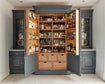
Double door larder cupboards offer significantly more storage space and are particularly useful for larger households.
These cupboards typically include wide shelving areas and internal door storage that can hold jars, spices, bottles, and smaller ingredients. The double door design allows users to open the cupboard fully, giving a complete view of everything inside.
This type of larder cupboard is ideal for families who store large quantities of dry foods and pantry items.
Tall larder cupboards
Tall larder cupboards make use of vertical storage to its fullest potential. These designs often reach close to ceiling height and provide numerous shelves for organised storage.
Tall units are especially effective in kitchens where floor space is limited but height is available.
By storing items vertically, tall larder cupboards can hold an impressive amount of food while maintaining a compact footprint.
Corner larder cupboards
In kitchens where space is tight, corner larder cupboards provide a clever storage solution.
Corners are often difficult areas to utilise effectively, but specially designed larder cupboards can transform these spaces into highly functional storage zones.
With the right shelving layout, corner larder cupboards allow homeowners to maximise every inch of kitchen space.
Key Features That Make Larder Cupboards So Effective
The effectiveness of larder cupboards comes from thoughtful design elements that prioritise accessibility and organisation.
Adjustable shelving is one of the most useful features. Different foods and containers vary in height, so adjustable shelves allow homeowners to customise storage based on their needs.
Door racks are another valuable feature. These racks provide extra storage for smaller items such as spices, sauces, and jars. By placing these items on the door interior, the main shelves remain available for larger food packages.
Deep shelves are also essential. Standard cabinets often lack depth, making it difficult to store bulk items. Larder cupboards typically feature deeper shelving, allowing for greater storage capacity.
Some designs also include internal drawers or pull-out trays that make it easier to access items stored further back.
Together, these features create a highly efficient storage system that transforms kitchen organisation.
How Larder Cupboards Improve Kitchen Organisation
One of the biggest frustrations in many kitchens is food storage chaos. Packets fall behind jars, ingredients become hidden at the back of shelves, and items expire because they are forgotten.
Larder cupboards solve these issues by centralising food storage.
With a dedicated cupboard for dry foods, homeowners can categorise ingredients into clear sections. For example, one shelf may hold baking ingredients, another shelf may contain breakfast foods, and another may store canned goods.
This structured approach dramatically improves organisation.
It also helps reduce food waste. When everything is visible and easily accessible, it becomes much easier to keep track of what needs to be used.
In busy households where meal preparation happens daily, this improved organisation saves time and eliminates unnecessary stress.
Design Styles of Larder Cupboards
Larder cupboards are available in a wide range of design styles that suit both traditional and modern kitchens.
Classic shaker style cupboards remain extremely popular in UK homes. Their simple panel design complements traditional kitchens while still fitting seamlessly into contemporary interiors.
Modern minimalist larder cupboards focus on clean lines and smooth finishes. These designs work particularly well in modern apartments and newly built homes.
Painted finishes allow homeowners to introduce colour into their kitchens. Soft neutral tones create a calm atmosphere, while deeper colours add bold character.
Natural wood finishes offer warmth and timeless appeal. These styles blend beautifully with both rustic kitchens and contemporary designs.
Because larder cupboards function as both storage and furniture, their design plays an important role in the overall aesthetic of a kitchen.
Choosing the Right Larder Cupboard for Your Kitchen
Selecting the right larder cupboard depends on several important factors.
Kitchen size is one of the most important considerations. Larger kitchens can accommodate wider or double door cupboards, while smaller kitchens may benefit from tall narrow designs.
Storage needs also play a role. Households that buy groceries in bulk may require deeper shelving and larger storage capacity.
Layout is another important factor. The cupboard should be positioned in a way that allows easy access without disrupting the kitchen workflow.
Door opening space must also be considered, especially with double door cupboards.
Taking time to evaluate these factors ensures the chosen larder cupboard integrates seamlessly into the kitchen.
How Larder Cupboards Enhance Kitchen Workflow
Beyond simple storage, larder cupboards significantly improve how a kitchen operates.
Cooking becomes more efficient when ingredients are organised and easily accessible. Instead of walking around the kitchen searching for items, everything is stored in one convenient location.
Meal preparation becomes faster because commonly used ingredients are always within reach.
Cleaning also becomes easier because fewer items are left on worktops.
In many homes, larder cupboards quickly become the central hub for kitchen activity.
Maximising Storage Inside Larder Cupboards
To get the most benefit from larder cupboards, proper organisation inside the cupboard is essential.
Grouping similar ingredients together makes it easier to find items quickly. For example, baking ingredients can be stored on one shelf while pasta and grains are stored on another.
Storage containers can help keep shelves tidy and prevent spills.
Labelling containers also improves visibility and organisation.
By maintaining an organised system inside the cupboard, homeowners can fully enjoy the efficiency that larder cupboards provide.
Why Larder Cupboards Continue to Grow in Popularity
Across the UK, homeowners are prioritising kitchens that combine style with functionality. Storage has become one of the most important design considerations in modern homes.
Larder cupboards address this need perfectly.
They offer substantial storage capacity without requiring large structural changes to the kitchen. They also add visual appeal while maintaining practical usefulness.
Because they blend traditional heritage with modern convenience, larder cupboards appeal to both classic and contemporary kitchen designs.
As more homeowners discover their benefits, it is clear that larder cupboards are not simply a passing trend but a long-term kitchen staple.
Conclusion
For UK households seeking better kitchen organisation, improved storage, and timeless design, larder cupboards offer an exceptional solution.
These versatile cupboards bring structure to kitchen storage, reduce clutter, and make everyday cooking more efficient. Their thoughtful design allows homeowners to store food, ingredients, and cooking essentials in a way that is both practical and visually appealing.
Whether used in traditional kitchens or modern homes, larder cupboards continue to prove their value as one of the most effective storage features available.
As kitchens evolve to meet the needs of modern living, it is easy to see why larder cupboards are becoming the heart of the organised, functional home.