- No products in the cart.




THE ULTIMATE GUIDE TO LARDER CUPBOARDS: TRANSFORM YOUR KITCHEN STORAGE FROM CHAOS TO COMPLETE CALM

27
May
If your kitchen feels perpetually disorganised, your tinned goods are stacked three rows deep inside a standard wall unit, and you can never find the pasta when you actually need it, chances are what your home is missing is a proper larder cupboard. Once considered a relic of Victorian kitchens, larder cupboards have staged a remarkable comeback in recent years — and for very good reason. They offer a level of storage practicality, aesthetic cohesion, and everyday functionality that simply cannot be replicated by a collection of mismatched wall and base units.
Whether you are fitting out a new kitchen from scratch, renovating an existing one, or just trying to reclaim some semblance of order in your food storage, this guide covers everything you need to know about larder cupboards. From the different styles and configurations available, to the internal fittings that genuinely make a difference, to how to choose the right one for your kitchen layout — this is your definitive resource.
What Is a Larder Cupboard and Why Does It Matter?
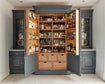
A larder cupboard is a tall, freestanding or fitted storage unit designed to consolidate food, kitchen supplies, and small appliances in one organised, dedicated space. Unlike standard kitchen cabinets, which are typically split into upper and lower units with a worktop separating them, a larder cupboard runs floor to ceiling and offers a substantial column of storage accessed through one or two full-height doors.
The term "larder" has its roots in the Latin word for bacon — historically, a larder was a cool room used to store raw meat and dairy before refrigeration existed. Today, modern larder cupboards have evolved far beyond their humble origins. They serve as the central command unit of a well-organised kitchen, housing everything from dried goods and tinned food to oils, spices, appliances, and even small appliances like coffee machines and toasters.
In the UK, where kitchen space is often at a premium, larder cupboards have become an increasingly popular solution. A well-designed larder cupboard can replace several individual cabinets, reducing clutter and freeing up worktop space simultaneously.
The Different Types of Larder Cupboards
Not all larder cupboards are created equal. Understanding the different types available will help you choose the one that best suits your kitchen and lifestyle.
Freestanding Larder Cupboards
Freestanding larder cupboards are self-contained units that do not need to be fixed to walls or integrated into a kitchen run. They are ideal for rental properties, period homes where built-in furniture feels out of place, or kitchens that need flexibility. The great advantage of a freestanding larder cupboard is portability — it moves with you if you change home.
Many freestanding larder cupboards come in traditional styles with beadboard panelling, vintage-inspired handles, and painted finishes that lend a farmhouse or country kitchen aesthetic. However, contemporary freestanding options are also widely available in clean, handleless designs that suit modern interiors.
Fitted Larder Cupboards
Fitted larder cupboards are built-in units that form part of a complete kitchen installation. They are designed to sit flush with surrounding cabinetry and are usually installed alongside base units, wall units, and an island or peninsula to create a seamless, integrated kitchen design.
Fitted larder cupboards tend to offer greater customisation in terms of internal layout, door styles, and dimensions. If you are having a new kitchen installed, opting for a fitted larder unit as part of your kitchen design is one of the best investments you can make.
Pull-Out Larder Cupboards
Also known as pull-out pantry units or larder pull-outs, these are tall cabinet systems that feature internal shelving, drawers, or wire baskets that extend outward on runners when the door is opened. Pull-out larder cupboards are exceptionally practical because they make every inch of depth accessible without requiring you to rummage at the back of a shelf.
They are particularly well-suited to narrow gaps between other units, making clever use of spaces that might otherwise go to waste.
Corner Larder Cupboards
Corner larder units are designed to make use of awkward corner spaces in a kitchen layout. Using rotating carousels, pull-out shelving systems, or bi-fold door configurations, corner larder cupboards transform one of the most challenging areas of any kitchen into genuinely usable storage.
Key Internal Features to Look for in a Larder Cupboard
The real value of a larder cupboard lies not just in its external appearance but in its internal configuration. Here is what to look for when assessing the practicality of a larder unit.
Adjustable Shelving
Fixed shelves are the enemy of flexibility. Adjustable shelving allows you to reconfigure the interior of your larder cupboard as your storage needs change — which they will. Whether you need to accommodate tall cereal boxes, small jars, or bulky appliances, the ability to reposition shelves without tools is an underrated but essential feature.
Internal Drawers and Baskets
Deep shelves are notorious for swallowing items and making them impossible to find. Internal drawers and wire baskets solve this problem by creating clearly defined zones within the cupboard and allowing easy access to items stored at the back. Drawers within a larder unit are particularly useful for storing loose items like herbs, spices, sachets, and condiment packets.
Door-Mounted Storage
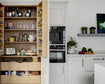
Many larder cupboards feature integrated door racks or pockets on the inner face of the door. These are ideal for storing spice jars, condiments, foil rolls, cling film, and other slim items that would otherwise occupy valuable shelf space. Door-mounted storage makes efficient use of what would otherwise be dead space.
Soft-Close Hinges and Drawer Mechanisms
Given the frequency with which a larder cupboard is opened and closed in a busy kitchen, the quality of the hinges and drawer runners matters significantly. Soft-close mechanisms prevent slamming, extend the life of the unit, and contribute to the premium feel of the overall kitchen.
Integrated Lighting
Internal LED lighting in a larder cupboard is not merely a luxury — it is genuinely practical. Deep storage units with multiple shelves can become dark and difficult to navigate, particularly in a kitchen that does not benefit from abundant natural light. Many contemporary larder units come with motion-activated or door-triggered LED strips as standard.
Larder Cupboard Sizes: Getting the Dimensions Right
Larder cupboards are available in a range of standard widths, heights, and depths. Understanding these dimensions will help you plan your kitchen layout effectively.
Standard larder cupboard heights typically align with full-height kitchen unit measurements — usually 2100mm to 2250mm, though this varies depending on the ceiling height and whether a plinth and cornice are incorporated.
Width options most commonly range from 300mm to 1000mm, with the most popular widths sitting at 500mm, 600mm, and 1000mm. Narrower options are useful for pull-out larder configurations, while wider single-door or double-door larder units offer maximum internal capacity.
Depth is equally important. A standard larder cupboard depth of 550mm to 600mm is typical and aligns with most kitchen worktop depths, ensuring a flush finish when installed alongside base units. However, it is worth noting that deeper larder units, while offering more storage volume, can make items stored at the back harder to reach — which is exactly why internal pull-out systems and adjustable shelving are so important.
When planning your kitchen, always account for the door swing of your larder cupboard. A full-height single door requires a clear arc of space in front of it. If your kitchen layout is compact, consider a double-door larder unit where each door only opens halfway, or a pull-out configuration that eliminates the door swing issue entirely.
Larder Cupboards in Different Kitchen Styles
One of the most appealing things about larder cupboards is their versatility. They can be successfully incorporated into virtually any kitchen aesthetic.
Shaker Kitchen Larder Cupboards
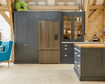
Shaker-style kitchens remain the most popular choice in the UK, and a shaker larder cupboard is a natural complement to this classic design. With clean recessed panelling, understated hardware, and a painted finish in muted tones like navy, sage, or off-white, a shaker larder unit provides timeless appeal without sacrificing functionality.
Handleless Modern Larder Cupboards
For contemporary and minimalist kitchens, handleless larder cupboards offer sleek, seamless lines. J-pull or push-to-open mechanisms eliminate protruding hardware, creating a uniform visual flow across the kitchen that feels calm, uncluttered, and thoroughly modern.
Country and Farmhouse Larder Cupboards
The country kitchen aesthetic leans into the historical heritage of the larder cupboard with gusto. Think open shelving sections behind glazed or mesh-fronted doors, tongue-and-groove detailing, chunky wooden handles, and warm painted or natural wood finishes. A larder cupboard in this style becomes not just a storage solution but a genuine focal point and a nod to the kitchen's traditional role as the heart of the home.
In-Frame Larder Cupboards
In-frame construction — where the door sits within a structural frame rather than over the face of the carcase — is considered the premium end of British kitchen cabinetry. An in-frame larder cupboard combines superior craftsmanship with a beautifully tailored appearance. These units are typically bespoke or semi-bespoke and represent a significant but worthwhile investment.
Planning Your Larder Cupboard: Practical Considerations
Before purchasing or commissioning a larder cupboard, there are several practical points worth working through carefully.
First, consider your household's food storage habits. If you do a large weekly shop, buy in bulk, or have a family to feed, a wide double-door larder with generous internal shelving and deep drawers will serve you far better than a narrow pull-out unit. Conversely, if you cook for one or two and prefer to shop little and often, a more modest larder may be entirely sufficient.
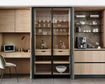
Second, think about what you want to store in your larder cupboard beyond food. Many homeowners use tall larder units to house small appliances such as a kettle, toaster, or coffee machine, keeping worktops free for food preparation. If this appeals to you, factor in the need for internal electrical sockets — an increasingly standard feature in premium larder units, and one that transforms worktop clutter overnight.
Third, consider the positioning of your larder cupboard within the overall kitchen layout. Larder units work best when positioned close to the primary preparation area, so that moving between storage and cooking is smooth and intuitive. They also benefit from being located away from direct heat sources like ovens and hobs, which can affect the temperature of stored food and the longevity of the unit's interior finishes.
Larder Cupboards and Kitchen Resale Value
From a property perspective, a well-designed kitchen with a properly configured larder cupboard is a genuine selling point in the UK housing market. Buyers increasingly recognise the practical value of dedicated pantry-style storage, and a larder unit signals a kitchen that has been thoughtfully designed rather than simply fitted.
If you are renovating with resale in mind, investing in a fitted larder cupboard as part of a cohesive kitchen design is a sound decision. The combination of improved storage capacity, reduced worktop clutter, and a high-quality aesthetic finish makes kitchens with larder units consistently more appealing to prospective buyers.
How to Organise Your Larder Cupboard Effectively
Owning a larder cupboard is only half the equation — organising it well is what turns storage space into a genuinely functional system. Here are the principles that make the biggest difference.
Group items by category and frequency of use. Items you reach for daily — oils, cooking sauces, spice jars, cereals — should occupy the most accessible zones, roughly between shoulder height and hip height. Items used less frequently, such as baking supplies, preserved goods, and bulk staples, can occupy higher or lower shelves.
Use consistent containers where possible. Decanting dried goods such as pasta, rice, lentils, and flour into uniform, labelled containers immediately elevates the visual coherence of the larder and makes it far easier to see at a glance what needs replenishing. Stackable containers make particularly good use of vertical shelf space.
Assign specific zones to specific categories. A dedicated baking zone, a snacking zone, a tinned goods zone, and a condiments zone eliminate the daily frustration of not knowing where anything lives. Once everyone in the household understands the system, it tends to maintain itself with very little effort.
Frequently Asked Questions About Larder Cupboards
What is the difference between a larder cupboard and a pantry?
A pantry traditionally refers to a separate room or dedicated walk-in storage area for food. A larder cupboard achieves a similar function but within the footprint of a standard kitchen cabinet unit. In modern usage, the terms are sometimes used interchangeably, though strictly speaking a larder cupboard is a cabinet while a pantry is a room.
Are larder cupboards worth it?
For most UK households, larder cupboards represent exceptional value for money when viewed in the context of an overall kitchen design. They consolidate a significant amount of storage into a single unit, reduce surface clutter, and contribute to the overall order and functionality of the kitchen. Many homeowners who install a larder unit find it becomes the single most-used and most-appreciated element of their kitchen.
What size larder cupboard do I need?
The right size depends on the size of your household, your shopping habits, and the available space in your kitchen. A 600mm wide larder unit is a solid starting point for most kitchens, while larger households or those who like to batch cook or buy in bulk will benefit from a 1000mm wide double-door larder configuration.
Can I add a larder cupboard to an existing kitchen?
Yes, it is entirely possible to retrofit a larder unit into an existing kitchen, provided there is sufficient space. Freestanding larder cupboards offer the most flexible solution for existing kitchens, as they require no structural changes. Fitted larder units can also be integrated into an existing kitchen run, though this typically requires the services of a kitchen fitter.
What should I keep in a larder cupboard?
Larder cupboards are primarily designed for food storage — dried goods, tinned food, cereals, oils, condiments, herbs, spices, and preserved items. However, many homeowners also use them to store kitchen roll, foil, cling film, food bags, and small appliances. Some larder units are designed to incorporate appliance garages with electrical sockets, making them suitable for housing a kettle, toaster, or coffee machine.
How do I keep my larder cupboard organised?
Consistent categorisation, regular decluttering, and the use of uniform storage containers are the three most effective strategies for maintaining an organised larder cupboard. Dedicating specific zones to specific categories and ensuring that everything is returned to its designated place after use will keep the system functioning smoothly on a day-to-day basis.
Do larder cupboards need ventilation?
Standard larder cupboards do not require dedicated ventilation. However, if you are storing food that benefits from cool, dry conditions — root vegetables, for example — positioning the larder unit away from heat sources such as an oven or a south-facing window will help maintain appropriate storage conditions.
Conclusion
Larder cupboards are one of those kitchen features that, once experienced, feel utterly indispensable. They bring order to chaos, reclaim worktop space, and deliver a level of practical kitchen functionality that standard wall and base units simply cannot match. Whether you are drawn to the charm of a traditional freestanding larder cupboard, the sleek efficiency of a handleless fitted unit, or the space-maximising ingenuity of a pull-out larder configuration, there is an option to suit every kitchen style, every layout, and every budget.
If you are planning a kitchen renovation or simply trying to make better use of the space you already have, a larder cupboard deserves serious consideration. The investment — in terms of both money and thoughtful planning — pays dividends every single day, in the form of a kitchen that simply works better.