- No products in the cart.




SILENT STORAGE REVOLUTION OF PANTRY CUPBOARDS IN MODERN UK HOMES

06
Apr
Pantry cupboards have quietly become one of the most practical and desirable storage solutions in the modern UK home. While kitchens continue to evolve in style, layout, and function, one thing remains constant: people need better ways to organise food, reduce clutter, and make everyday life easier. That is exactly where pantry cupboards shine.
Whether you live in a compact city flat, a growing family home, or a period property with a busy kitchen, pantry cupboards offer a smart, elegant way to bring order to one of the most used spaces in the house. They do more than simply store food. They create a dedicated home for dry goods, snacks, baking ingredients, kitchen essentials, and household overflow, all while helping your kitchen feel calmer, cleaner, and more efficient.
In this guide, we’ll explore exactly why pantry cupboards have become so popular in UK homes, what makes them such a practical investment, how to choose the right one, and how to use them to transform your kitchen storage for the better.
Why Pantry Cupboards Are So Popular in UK Kitchens
There is a reason more homeowners are actively searching for pantry cupboards than ever before. Kitchens are expected to do much more today than they used to. They are no longer just spaces for cooking. They are family hubs, work zones, social spaces, and often the centre of the home.
As kitchens take on more responsibility, storage becomes even more important.
Traditional wall cabinets and under-counter cupboards can quickly become overcrowded, especially when trying to store food, small appliances, cleaning products, and cookware all in one place. Pantry cupboards solve this problem by giving you a tall, dedicated storage area designed specifically for organisation.
This is especially valuable in UK homes, where kitchen space is often limited and every inch matters.
The biggest reasons homeowners choose pantry cupboards:
- They create more usable kitchen storage without requiring a full renovation
- They help keep food and essentials in one organised place
- They reduce worktop clutter
- They make meal prep faster and easier
- They help smaller kitchens feel more structured and less chaotic
- They bring a timeless, furniture-style look to the kitchen
In short, pantry cupboards are not just a trend. They solve a real everyday problem.
What Are Pantry Cupboards?
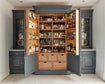
Pantry cupboards are tall kitchen storage units designed to hold food, ingredients, and everyday kitchen essentials in a more organised and accessible way. They often include shelves, internal compartments, drawers, baskets, or a combination of all three.
Some pantry cupboards are freestanding, while others are designed to integrate into fitted kitchens. Freestanding pantry cupboards are especially popular because they offer flexibility, character, and substantial storage without needing built-in joinery.
A good pantry cupboard can typically be used to store:
- Tins and jars
- Pasta, rice, cereals, and dry foods
- Baking supplies
- Tea, coffee, and hot drink essentials
- Snacks and lunchbox items
- Condiments and sauces
- Small kitchen appliances
- Cleaning products (if separated properly)
- Tableware or serving items
The beauty of pantry cupboards lies in their versatility. One household may use theirs as a food station, another as a breakfast cupboard, and another as a full kitchen overflow solution.
Pantry Cupboards vs Standard Kitchen Cupboards
At first glance, some people assume pantry cupboards are simply tall cupboards with a nicer name. In reality, they serve a different purpose and offer a different kind of usability.
Standard kitchen cupboards are often general-purpose storage units. Pantry cupboards, by contrast, are designed with intentional organisation in mind.
What makes pantry cupboards different?
- They usually offer more vertical storage
- They often include shelf spacing better suited to food items
- They help group similar kitchen essentials together
- They are easier to zone and organise
- They can often store much more than multiple smaller cupboards combined
This matters because one of the biggest frustrations in many kitchens is not the total amount of storage, but the usability of that storage.
You may technically have enough cupboards, but if items are scattered, stacked awkwardly, or hidden behind other items, your kitchen still feels inconvenient. Pantry cupboards help fix that.
The Practical Benefits of Pantry Cupboards
The rise in demand for pantry cupboards is not just about aesthetics. It is rooted in practical, day-to-day improvements.
1. Better food organisation
One of the biggest advantages of pantry cupboards is the ability to store food in categories. Instead of having cereal in one cupboard, pasta in another, snacks in a drawer, and spices squeezed beside mugs, everything can be arranged logically.
This makes it easier to:
- See what you already have
- Avoid overbuying
- Keep ingredients together
- Find what you need quickly
- Reduce food waste
2. A cleaner, less cluttered kitchen
Worktop clutter is one of the fastest ways to make a kitchen feel messy. Pantry cupboards allow you to move many commonly used items off the counters and into one neat storage area.
This is ideal for storing:
- Bread bins
- Tea and coffee supplies
- Toasters
- Air fryers
- Mixing bowls
- Everyday food staples
A more organised kitchen often feels bigger, calmer, and easier to maintain.
3. Improved daily routine
Pantry cupboards can make your kitchen work better for your household. Instead of repeatedly opening multiple cabinets while cooking, preparing lunches, or putting groceries away, you have a centralised zone that supports your routine.
This is especially helpful for:
- Busy families
- Meal planners
- Home bakers
- Batch cooks
- Shared households
4. Better use of vertical space
In many UK kitchens, floor space is limited, but vertical space is underused. Pantry cupboards take advantage of height, allowing you to store much more without spreading out across the room.
This is particularly useful in:
- Galley kitchens
- Utility-adjacent kitchens
- Flats and apartments
- Cottage kitchens
- Homes with limited cabinetry
Why Pantry Cupboards Work So Well in UK Homes
The UK housing stock is incredibly varied, from Victorian terraces and Edwardian semis to new-build homes and converted flats. Pantry cupboards work well across these property types because they offer flexible, furniture-style storage that does not always require structural changes.
In smaller UK kitchens
Many British kitchens are not oversized open-plan showrooms. They are practical, hardworking spaces where storage must be efficient. Pantry cupboards provide a high-storage solution without needing a major redesign.
In period properties
Freestanding pantry cupboards often complement older homes beautifully. Their furniture-style appearance can feel more in keeping with traditional interiors than ultra-modern built-ins.
In family homes
As households grow, kitchens often become busier and harder to keep tidy. Pantry cupboards can create dedicated zones for children’s snacks, packed lunch items, breakfast foods, and bulk food storage.
In modern homes
Even in newer kitchens, pantry cupboards remain highly desirable because they add function and a sense of order. They can also soften a kitchen visually, making it feel more lived-in and welcoming.
How to Choose the Right Pantry Cupboards
Not all pantry cupboards are created equal. Choosing the right one depends on your kitchen layout, storage needs, and how you plan to use it.
1. Measure your available space properly
Before choosing pantry cupboards, consider:
- Overall height
- Width and depth
- Door clearance
- Nearby appliances
- Walking space around the unit
In smaller kitchens, depth can be just as important as width. A slightly shallower pantry cupboard may provide better usability without crowding the room.
2. Think about what you actually need to store
A common mistake is buying storage based on appearance alone. Instead, think practically.
Do you want to store:
- Dry foods?
- Baking supplies?
- Breakfast items?
- Cleaning products?
- Small appliances?
- Servingware?
The more specific you are, the easier it is to choose pantry cupboards with the right internal layout.
3. Consider internal shelf flexibility
Adjustable shelving can make a huge difference. It allows you to adapt the storage over time as your household needs change.
Flexible interiors are particularly useful if you want to store a mix of:
- Tall cereal boxes
- Storage jars
- Bottles
- Baskets
- Kitchen gadgets
4. Match style with function
Pantry cupboards should be practical first, but style still matters, especially in kitchens where the unit will be a visible focal point.
Look for a design that suits your kitchen’s overall feel:
- Clean and simple for modern interiors
- Shaker-inspired for classic kitchens
- Rustic finishes for country-style spaces
- Minimalist neutral tones for versatile styling
The Best Ways to Organise Pantry Cupboards
Buying pantry cupboards is only half the equation. How you organise them determines how useful they really become.
The goal is not perfection. It is accessibility, visibility, and ease of use.
Smart pantry cupboard organisation ideas
Create clear zones
Divide your pantry cupboards into sections such as:
- Breakfast
- Baking
- Dinner staples
- Snacks
- Tins and jars
- Tea and coffee
- Household overflow
This helps everyone in the home know where things belong.
Put everyday items at eye level
The items you use most often should be the easiest to reach. Keep:
- Cereal
- Pasta
- Tea and coffee
- Snacks
- Cooking oils
- Frequently used ingredients
at eye or chest height where possible.
Store heavier items lower down
Bulk foods, bottles, appliances, and heavier containers should be placed lower for both safety and convenience.
Use baskets and containers wisely
Storage baskets and clear containers can help pantry cupboards feel more structured, especially for loose packets or grouped items. They also make it easier to pull out categories quickly rather than rummaging through shelves.
Label if it helps your routine
Labels are not essential, but they can be useful in busy households or shared kitchens where consistency matters.
Pantry Cupboards for Small Kitchens
One of the most common assumptions is that pantry cupboards are only for large kitchens. In reality, they can be especially valuable in smaller spaces.
When chosen well, pantry cupboards can replace the need for multiple smaller storage areas and make a compact kitchen feel more functional.
Tips for using pantry cupboards in small kitchens:
- Choose taller rather than wider designs
- Prioritise adjustable shelving
- Avoid overly deep units if floor space is tight
- Use the top shelves for less-used items
- Keep the contents organised to prevent wasted space
A well-planned pantry cupboard can often make a small kitchen feel significantly more efficient.
Pantry Cupboards as a Design Feature
Beyond practicality, pantry cupboards also add visual structure to a kitchen. A tall, well-designed unit can anchor a wall, balance surrounding cabinetry, and create a more finished overall look.
They often work beautifully as:
- End-of-run storage pieces
- Standalone feature furniture
- Symmetrical storage flanking other kitchen elements
- Transitional pieces between kitchen and dining spaces
Because of their scale and presence, pantry cupboards can contribute to the style of a kitchen in a way smaller cabinets often do not.
Common Mistakes to Avoid When Buying Pantry Cupboards
To get the most value from pantry cupboards, it helps to avoid a few common mistakes.
Choosing style over storage layout
A cupboard may look lovely, but if the interior does not suit your actual needs, it may become frustrating quickly.
Ignoring shelf depth
Deep shelves can seem appealing, but if items get hidden at the back, usability drops. Visibility matters.
Overfilling from day one
One of the biggest advantages of pantry cupboards is breathing room. Overstuffing them immediately makes them harder to use and maintain.
Forgetting future flexibility
Households change. Food habits change. Kitchens evolve. Choosing pantry cupboards with adaptable internal storage is usually a smarter long-term move.
Are Pantry Cupboards Worth It?
For most households, yes, pantry cupboards are absolutely worth it.
They offer a rare combination of:
- Better storage
- Improved kitchen organisation
- Strong day-to-day practicality
- Long-term usability
- Timeless visual appeal
Unlike some home purchases that are mainly decorative, pantry cupboards genuinely improve how your kitchen functions every single day.
If your current kitchen feels cluttered, inconvenient, or difficult to organise, pantry cupboards can often provide one of the most noticeable improvements without requiring a complete kitchen overhaul.
The Long-Term Value of Pantry Cupboards
A well-chosen pantry cupboard is not just a short-term storage fix. It can continue to serve your home for years by adapting to changing routines, family needs, and kitchen habits.
Over time, pantry cupboards can help with:
- More efficient grocery storage
- Easier meal planning
- Better kitchen flow
- Reduced clutter
- A more enjoyable cooking environment
And because they remain such a sought-after storage feature, they can also contribute positively to the perceived practicality and desirability of a kitchen.
Final Thoughts on Pantry Cupboards
Pantry cupboards are one of the most useful and underrated upgrades for a UK kitchen. They combine smart storage, everyday practicality, and timeless appeal in a way few other furniture pieces can.
Whether you are trying to maximise a smaller kitchen, bring order to a busy family home, or simply create a more functional cooking space, pantry cupboards offer a genuinely effective solution.
They help turn scattered storage into intentional storage.
They make food easier to organise.
They reduce clutter.
They support daily life.
And perhaps most importantly, they help your kitchen feel like it is working with you rather than against you.
For households that want more order, more flexibility, and a more functional kitchen without sacrificing style, pantry cupboards remain one of the best storage investments you can make.
FAQ SECTION
What are pantry cupboards used for?
Pantry cupboards are mainly used to store food, dry goods, snacks, baking ingredients, kitchen essentials, and sometimes small appliances. They help keep kitchen items organised and easy to access.
Are pantry cupboards good for small kitchens?
Yes, pantry cupboards are often excellent for small kitchens because they make better use of vertical storage and can reduce clutter across multiple cupboards and worktops.
What should I store in pantry cupboards?
You can store items such as tins, pasta, rice, cereals, sauces, tea, coffee, snacks, baking supplies, and other non-perishable kitchen essentials. Some people also use pantry cupboards for breakfast stations or small appliances.
Are freestanding pantry cupboards practical?
Freestanding pantry cupboards are very practical because they offer flexible storage without needing a fitted kitchen redesign. They are especially useful for renters, older homes, and kitchens that need extra storage quickly.
How do I organise pantry cupboards properly?
The best way to organise pantry cupboards is to group similar items together, keep everyday essentials at eye level, place heavier items lower down, and use baskets or containers where helpful.
Do pantry cupboards make kitchens look better?
Yes, pantry cupboards can improve both function and appearance. They often make kitchens look more structured, less cluttered, and more thoughtfully designed.
Are pantry cupboards worth buying?
For many households, pantry cupboards are absolutely worth buying because they provide long-term storage, improve kitchen organisation, and help make daily life easier.
What is the difference between a pantry cupboard and a larder cupboard?
The terms are often used interchangeably. In many UK homes, both refer to tall kitchen storage units designed for food and household essentials. Some people use “larder cupboard” for a more traditional or larger version.