- No products in the cart.




LARDER CUPBOARDS: THE QUIET STORAGE UPGRADE TRANSFORMING MODERN UK KITCHENS

06
Feb
Introduction: Why larder cupboards are having a moment
Kitchen design in the UK has shifted dramatically over the past decade. Open-plan living, streamlined cabinetry, and clutter-free worktops are no longer luxuries reserved for high-end homes; they have become everyday expectations. At the centre of this evolution sits a deceptively simple yet transformative feature: larder cupboards.
Once associated mainly with traditional pantries or large country homes, larder cupboards are now one of the most searched-for kitchen storage solutions in the UK. Homeowners, landlords, renovators, and developers are increasingly recognising their practical and aesthetic value. They solve real problems: lack of storage, messy worktops, disorganised food supplies, and inefficient kitchen layouts.
This guide is designed to be a comprehensive, practical resource for anyone researching larder cupboards. Whether you are planning a full kitchen renovation, upgrading a rental property, or simply looking for smarter storage, this article will walk you through everything you need to know, from types and layouts to sizing, placement, materials, and long-term value.
What are larder cupboards?
Larder cupboards are tall, vertical storage units designed primarily for food, kitchen supplies, and small appliances. Unlike standard base or wall cabinets, they maximise height rather than width, allowing you to store a large volume of items within a relatively small footprint.
In modern kitchens, larder cupboards often replace the need for a separate pantry room. They typically include a mix of internal shelves, pull-out baskets, and compartments that make it easier to see and access stored items. The defining feature is organisation: everything has a place, and everything is easy to reach.
Why larder cupboards make sense for UK homes
UK kitchens are often smaller than their international counterparts, particularly in urban areas, terraced houses, and flats. Space efficiency is therefore crucial. Larder cupboards excel in this environment because they use vertical space that would otherwise go underutilised.
Another key factor is lifestyle. Many households now do larger grocery shops less frequently, meaning more food storage is required at home. Larder cupboards provide a structured way to store dry goods, tins, snacks, and even cleaning supplies without overwhelming worktops or standard cabinets.
Energy efficiency also plays a role. By consolidating food storage in one area, kitchens become easier to use and manage, reducing wasted time searching for items and encouraging better food rotation, which can help reduce waste.
Different types of larder cupboards
Not all larder cupboards are the same. Understanding the main types will help you choose a solution that fits both your space and how you use your kitchen.
Full-height larder cupboards
These run from floor level to the top of the cabinetry or ceiling. They offer maximum storage and are ideal for households that rely heavily on cupboard storage rather than open shelving.
Slim larder cupboards
Often as narrow as 300mm, slim larder cupboards are perfect for tight spaces or as additions alongside ovens or fridge units. Despite their narrow width, they can store a surprising amount when fitted with pull-out systems.
Double-door larder cupboards
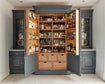
These wider units provide a pantry-like experience. When opened, they reveal multiple shelves on both doors and inside the main cavity, offering excellent visibility and access.
Internal pull-out larder cupboards
Pull-out designs allow the entire contents to slide forward when opened. This is particularly useful in deep cupboards, ensuring nothing gets lost at the back.
Traditional-style larder cupboards
Inspired by classic pantries, these often feature solid doors and internal shelving, making them popular in shaker-style and country kitchens.
Choosing the right size and dimensions
Selecting the correct size for larder cupboards is essential. Too small, and they will not meet your storage needs. Too large, and they may overwhelm the kitchen layout.
Height
Most larder cupboards are designed to align with tall units such as integrated appliances. Standard heights often range from 1970mm to 2150mm, though taller options are available for high-ceiling kitchens.
Width
Common widths include 300mm, 400mm, 500mm, and 600mm. Wider units provide more storage but require sufficient wall space. Narrower options are ideal for filling gaps or adding extra storage without major layout changes.
Depth
Standard depths typically match other tall kitchen units, ensuring a cohesive look. Deeper cupboards provide more storage but may need pull-out mechanisms to maintain accessibility.
Where to position larder cupboards in a kitchen layout
Placement can make or break the usability of larder cupboards. Ideally, they should be positioned close to food preparation areas but away from high-traffic walkways.
Common placements include next to ovens, near fridge-freezers, or at the end of a run of cabinets. In open-plan kitchens, larder cupboards can also act as visual anchors, helping to zone the kitchen area without physical walls.
In smaller kitchens, placing larder cupboards against a single wall rather than spreading storage across multiple areas often results in a cleaner, more efficient layout.
Internal configurations that maximise usability
The internal layout of larder cupboards is just as important as their external appearance.
Adjustable shelving allows flexibility as storage needs change over time. Pull-out baskets improve visibility and reduce bending or reaching. Fixed shelves provide stability for heavier items such as appliances or bulk goods.
Many households find a combination works best: baskets for everyday items and shelves for less frequently used supplies.
Materials and finishes for long-term durability
Larder cupboards are used daily, so material choice matters. Durable carcasses, robust hinges, and high-quality shelf supports ensure longevity.
Finish selection should align with the overall kitchen design. Matte finishes offer a contemporary look and hide fingerprints well, while traditional painted finishes suit classic kitchens. Wood-effect finishes remain popular for adding warmth without the maintenance of solid wood.
For rental properties or high-use households, easy-to-clean finishes are often the most practical choice.
Larder cupboards and modern kitchen aesthetics
One of the biggest advantages of larder cupboards is their ability to blend seamlessly into modern kitchens. When designed correctly, they do not look like separate storage units but rather an integrated part of the cabinetry.
Handleless designs create a clean, minimalist appearance, while classic handles can add character. In both cases, consistency is key. Matching door styles and finishes across all units ensures larder cupboards enhance rather than disrupt the visual flow.
Storage benefits beyond food
Although primarily associated with food storage, larder cupboards are increasingly used for other purposes. Many households use them to store small kitchen appliances, freeing up worktop space.
Others dedicate sections to cleaning supplies, recycling accessories, or even pet food. This versatility is one of the reasons larder cupboards are considered a future-proof investment.
Larder cupboards for landlords and developers
For landlords, larder cupboards offer a practical upgrade that tenants value. Kitchens with ample storage are easier to market, often reducing void periods and improving tenant satisfaction.
From a maintenance perspective, well-built larder cupboards are durable and less likely to suffer from wear compared to multiple smaller cabinets. For developers, they add perceived value without significantly increasing build costs.
Cost considerations and budgeting
The cost of larder cupboards varies depending on size, materials, and internal fittings. While they may represent a higher initial investment than standard cabinets, their storage capacity often means fewer additional units are required.
Over time, the value becomes clear. Better organisation, reduced clutter, and improved kitchen usability contribute to a higher-quality living space, which is especially important for resale or rental appeal.
Common mistakes to avoid
One common mistake is underestimating how much storage is actually needed. Another is choosing deep cupboards without pull-out systems, leading to wasted space.
Poor placement can also reduce usability. Larder cupboards should be easy to access without blocking walkways or appliance doors.
Finally, mismatched finishes or styles can make even high-quality larder cupboards look out of place. Planning holistically is essential.
How larder cupboards support everyday organisation
A well-organised kitchen saves time, reduces stress, and encourages healthier habits. Larder cupboards make it easier to see what you have, plan meals, and avoid overbuying.
Clear zones within the cupboard, such as breakfast items, cooking staples, and snacks, create a system that the whole household can follow. This is particularly beneficial for families and shared households.
Sustainability and waste reduction
By improving visibility and accessibility, larder cupboards help reduce food waste. Items are less likely to be forgotten or expire unused.
They also encourage bulk buying of staples, which can reduce packaging waste and shopping frequency. For environmentally conscious households, this practical benefit is increasingly important.
Adapting larder cupboards for future needs
One of the strengths of larder cupboards is adaptability. As household needs change, shelves can be adjusted, baskets added, or contents reorganised.
This flexibility makes them suitable for a wide range of life stages, from young professionals to growing families and downsizing households.
Conclusion: why larder cupboards are a smart long-term choice
Larder cupboards are no longer a niche feature or luxury addition. They are a practical, efficient, and visually appealing solution to modern kitchen storage challenges in the UK.
By maximising vertical space, improving organisation, and integrating seamlessly into a variety of kitchen styles, larder cupboards deliver value every single day. Whether you are renovating, building, or upgrading, they offer a return that goes far beyond aesthetics.
For anyone seeking a more functional, organised, and future-ready kitchen, larder cupboards are not just an option; they are a strategic upgrade that transforms how a kitchen is used and enjoyed.